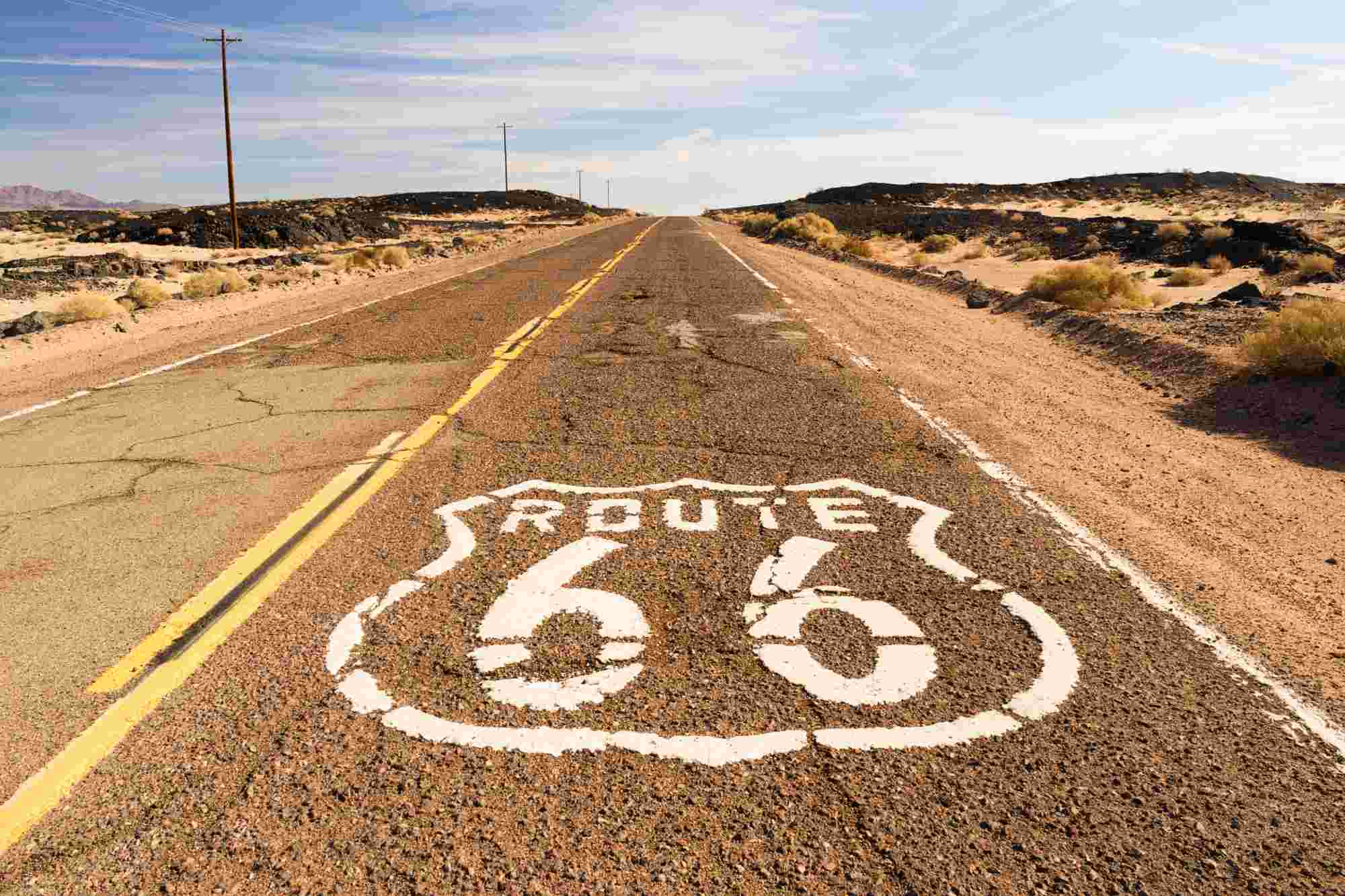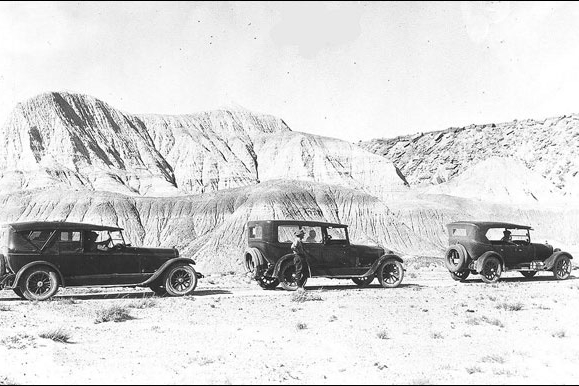

The Mother Road has seen significant evolution over the past century. Throughout its 100‑year history, Route 66 has been constantly realigned, reshaped, and reimagined. It was an official U.S. highway for a dozen years before it was entirely paved. And just a few months ago, the starting point for what is now Historic Route 66 in Chicago was moved 2 miles to the Navy Pier. The evolution of Route 66 parallels the remarkably history of America throughout most of the 20th century and into the 21st century: from the Depression to World War II, from the economic prosperity of the 1950s to the space race of the 1960s, from the challenges of the 1970s to the modernization of the 1980s, when U.S. Route 66 was officially decommissioned. The past few decades of evolution have been about preservation and revitalization. Lost Alignments Route 66 has a reputation for being one highway, a single line on the map stretching from Chicago to Santa Monica. The reality is far more interesting. For much of its life, Route 66 was not a single road but a living network of evolving alignments which have been rerouted, straightened, bypassed, and sometimes abandoned entirely as America’s transportation needs changed. When the highway was commissioned in 1926, it stitched together existing state and local roads rather than carving an entirely new path. That meant early Route 66 was often indirect, following the contours of towns, farmland, and terrain. It bent into communities instead of skirting them, which is what made it economically powerful. Every turn brought travelers past gas stations, cafes, and motor courts that depended on the steady flow of cross‑country traffic. But roads change, and Route 66 changed faster than most. Old cars ride through the Painted Desert in Arizona following the original dirt road. By the 1930s and 1940s, increasing traffic volumes and the push for faster interstate travel began to reshape the highway. Engineers straightened curves, bypassed crowded downtowns, and shifted the route onto newer pavement where available. After World War II, this process accelerated. Entire segments of U.S. 66 were relocated to improve safety and efficiency, leaving behind long stretches of “old road” that quietly slipped into local use – or simply faded away. By the time the Interstate Highway System arrived in 1956, Route 66’s fate was sealed. Interstates 55, 44, 40, and 15 gradually replaced… [TheTopNews] Read More.
1 week ago