- Bluegrass and Billy Strings
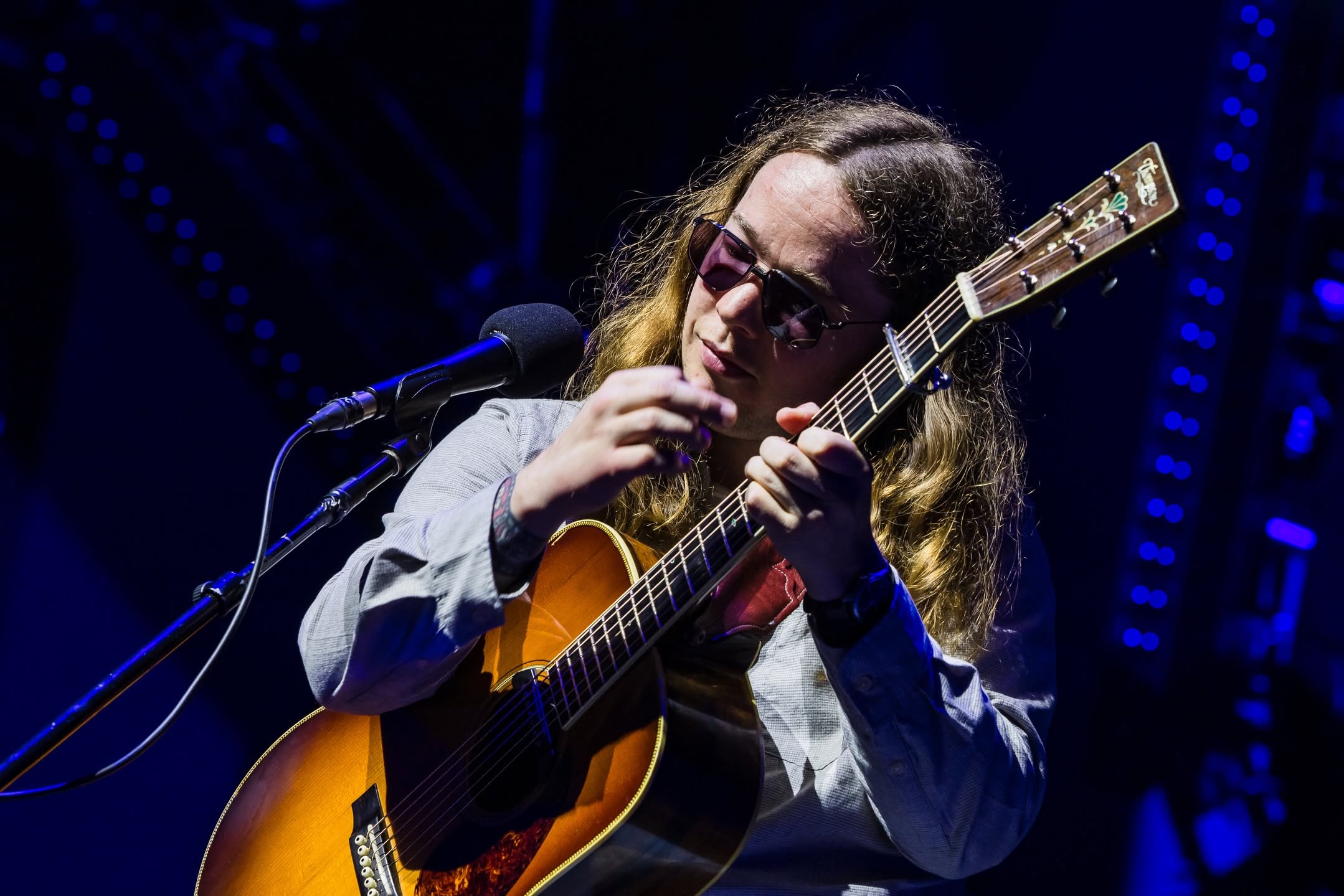
 Somewhere in my head, I carry a little list of bands that represent perfect self-contained mechanisms, regardless of category: the Modern Jazz Quartet, Astor Piazzolla’s Tango Nuevo Quintet, and the Chieftains. Now there’s another: the band led by the bluegrass singer, guitarist and songwriter Billy Strings. I’m late to Billy Strings; three Grammys late, to be exact, all for best bluegrass album of the year in 2021, 2025 and 2026. He’s been around for a while but I didn’t catch up until his new album, So Much for Goodbyes, which is one of the most enjoyable things I’ve heard this year — particularly a wonderful track called “Lucid Daydream”, which bends the bluegrass format in a very compelling way. Last year Strings was invited to support Bob Dylan and Willie Nelson on a few dates of their Outlaws tour, and cancelled his own summer dates in order to do so. I found a clip of his cover of “Tangled Up in Blue”, not from the Outlaws shows but from his own gig in Hartford, Connecticut in July of this year, and I think it’s completely brilliant — nothing radical in terms of reinterpretation, but in sheer spirit and love of the material it’s up there with the very best of Dylan covers. Like “Lucid Daydream”, it’s also a great demonstration of how good he and his band can be in what is anyway an idiom rooted in the joyous expression of instrumental virtuosity. He’s a superfine picker, kind of a turbocharged bluegrass Mark Knopfler, as the short solos on the Dylan song demonstrate, but he’s matched every step of the way by Alex Hargreaves on fiddle, Billy Falling on banjo, Jarrod Walker on mandolin, and Royal Masat on string bass. Together they show how an old-time diasporic music form can be brought right up to the present. I’m just sorry it took me a while, in this instance, to find that out. But better late than never. * The photo of Billy Strings, taken at a gig this summer by an uncredited photographer, is from his Facebook page. So Much for Goodbyes is out now on the Reprise label. [TheTopNews] Read More.15 hours ago
 - Coltrane at 100
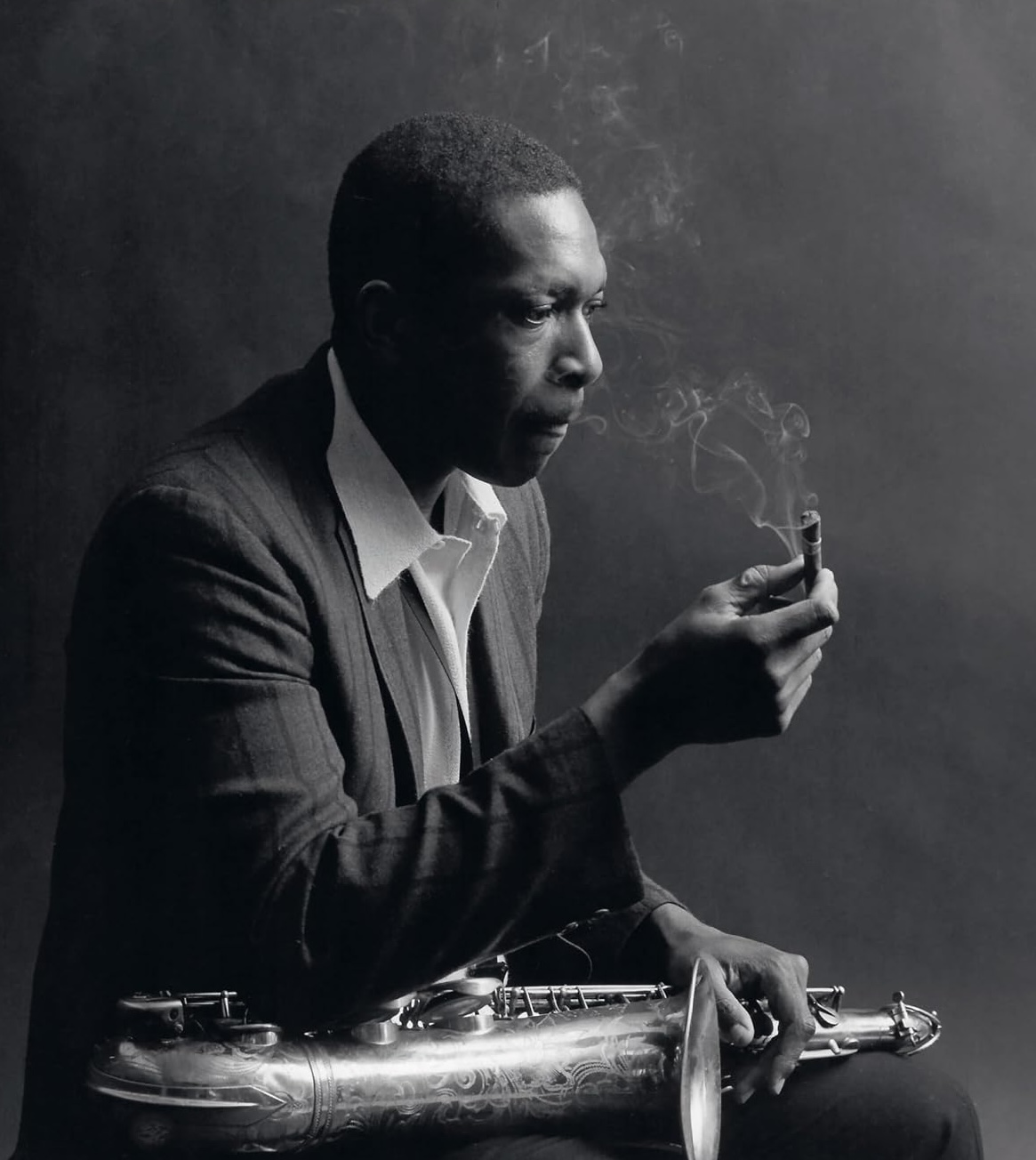
 I loved jazz as soon as I discovered it, but it was when I heard John Coltrane that I realised it could take me to a different place. That would have been around 1960, and the first thing I heard was his solo on Miles Davis’s “Milestones”, on an EP. Then I used the money from my paper round to buy another EP, this time released under Coltrane’s own name. Issued in the UK on the Esquire label, it paired “Bass Blues” and “You Leave Me Breathless” from his third studio album for Prestige, recorded in 1957. These were fairly conventional performances but I already knew, from reading Down Beat, that he was heading somewhere else. Soon there would be Coltrane Plays the Blues and Olé, which made that new direction very clear. From the very start, though, there was that sound. You can hear it in the opening notes of his solo on “Bass Blues”. It was like nothing you’d ever heard before. Nothing like Lester Young or Dexter Gordon or Sonny Rollins. It spoke in a different way, to a different part of the brain. It wasn’t pretty in any normal sense. But it was immediately and transcendentally beautiful. Even then, it seemed to be searching for something beyond the tune, beyond the notes. I couldn’t put it into words then and I still can’t. I’ve never read anybody who really could. Today, 23 September 2026, is the centenary of Coltrane’s birth. I could have listened to any of the favourites — the album with Monk from Carnegie Hall, “Mr Syms”, “Impressions”, “Africa”, “Alabama”, the whole of A Love Supreme, Crescent and Expressions — but instead I chose to honour his memory by listening to two of his most challenging albums, Om and Kulu Se Mama, both from 1965, They’re the sort of thing that gave critics the ammunition with which to attack his entire career, and 60 years later they still sound chaotic, beyond all structure and restraint and explanation, the product of a man searching for something beyond himself. His death in 1967 robbed us of the chance to get answers from Coltrane himself, either i words or in his playing, to the questions raised by his later music. What did it all mean? That’s something we have to work out for ourselves. What I can give is… [TheTopNews] Read More.6 days ago
 - Dialogue at Wigmore Hall
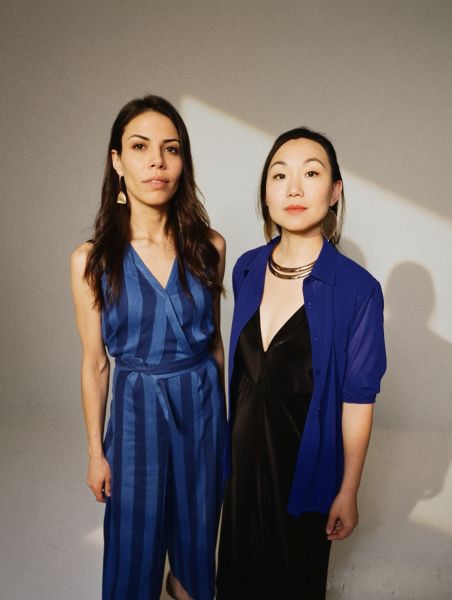
 For 50 minutes at Wigmore Hall last night, the bassist Linda May Han Oh and the tenor saxophonist Melissa Aldana delivered a lesson in how to take the finest material from the past and weave it into something that belongs firmly to the present. The Australian (born in Malaysia, of Chinese heritage) is the current answer to any question about which bassist you would choose to add energy and invention to your contemporary jazz group. The Chilean specialises in an unstoppable flow of creativity, her ideas developed with an unassuming virtuosity that places her at the forefront of the current generation of saxophonists. They were re-examining material from their new duo album, Beneath Lifted Skies, starting with Sam Rivers’ “Cyclic Episode”, which quickly revealed the nimbleness and intimacy of their musical partnership: lines were wrapped around each other in a constantly evolving double-helix. “I’ll Be Seeing You”, a standard rescued from a flop 1938 musical, enabled Aldana to display the inspiration of Sonny Rollins in her improvising, manifesting a kind of serious playfulness expressed via a lovely middleweight tone and seemingly effortless fluidity of execution, matched by Oh in a solo full of a deep lyricism that also irradiated the bassist’s playing, from a different perspective, on Charles Mingus’s “Duke Ellington’s Sound of Love”. Bebop was taken for a 21st century ride on Bud Powell’s “Hallucinations” and a staggering, jet-propelled “Anthropology”, the unison statements of Charlie Parker’s tune taking the breath away. It was a wonderful demonstration both of what remains possible with extensions of what we still call modern jazz and of the possibilities inherent in the conventional language of the two instruments. The album is terrific, but this performance stretched the tunes further in all sorts of interesting and compelling ways. This complex, brainy, sometimes witty, fundamentally interactive music created a world of its own, carrying the audience along its unfolding narrative, and it seemed a pity when they chose to disrupt the carefully built dramatic tension by introducing a couple of guest musicians, the altoist Will Vinson and the singer Jo Lawry. Both were excellent, in their ways, but I was glad to have the memory of those spellbinding 50 minutes of intense dialogue to take away with me. * Beneath Lifted Skies is available via Bandcamp: https://lindamayhanoh.bandcamp.com/album/beneath-lifted-skies [TheTopNews] Read More.7 days ago
 - Woody Guthrie in Soho
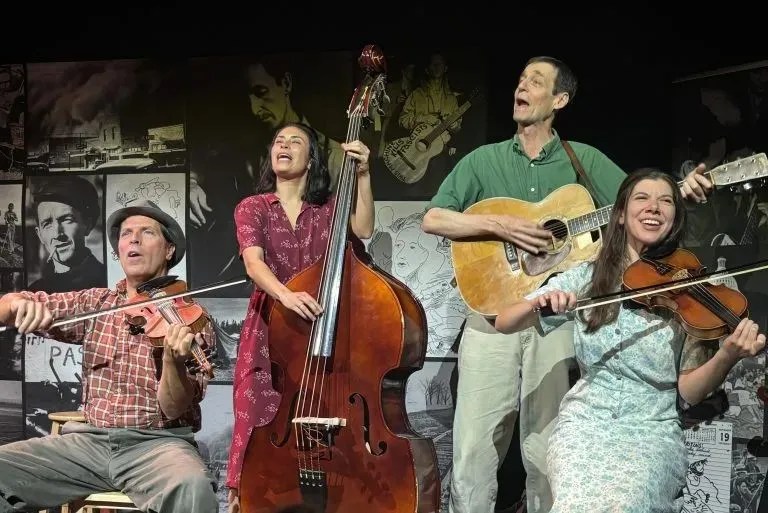
 At a few minutes after eight o’clock last night, in an upstairs theatre on a Soho alley, you’d have had a job persuading me that Woody Guthrie’s “Deportee (Plane Wreck at Los Gatos)” is not the greatest song produced by the 20th century. Its performance came towards the end of Woody Sez, a stage show devoted to the life and work of the great poet-troubadour of America’s working class. David M. Lutken, a Texan actor-musician who once studied in London, devised the four-person show (with its director, Nick Corley) and was playing the part of Guthrie, his lean frame and likeable delivery making him a good fit. “Deportee”, which Guthrie wrote in 1948 after reading a newspaper report about the crash in California of a plane in which 28 migrant farm workers were being deported back to Mexico, was sung as a duet with Raquel Chavez, and I don’t think I’ve ever heard a more affecting version. But it wasn’t alone as a highlight of the evening. With Lutken delivering Guthrie’s story as a between-songs first-person narrative, we were also treated to rousing versions of “Pastures of Plenty”, “Ain’t Got No Home”, “This Train Is Bound for Glory”, “Jolly Banker”, “Vigilante Man” and several others, with “This Land Is Your Land” delivered as a closing singalong. Chavez, Nyssa Grant and David Finch took occasional lead vocals and sang harmonies while switching between a variety of instruments: duelling fiddles, mandolin, dulcimer, autoharp, string bass, penny whistle, spoons, harmonica, Jew’s harp, banjo, six- and 12-string guitars and a dobro. Their deftness and enthusiasm, and some clever stage movement, ensured that the 80-minute show never dragged. “Deportee” may have moistened the eyes, but elsewhere there was a lot of humour and fun. It was good to be reminded of a key source of inspiration for Bob Dylan, Ry Cooder, Bruce Springsteen, Rhiannon Giddens and many more, and also of the need for resistance in times when the greed and cruelty of the vigilantes and the jolly bankers threaten the common good. * There are further performances of Woody Sez tonight, tomorrow and Saturday (17-19 September) at Underbelly Boulevard Soho, 6 Walker’s Court, London W1F 0BT: underbellyboulevard.com [TheTopNews] Read More.2 weeks ago
 - ‘A Ritual for John Coltrane’
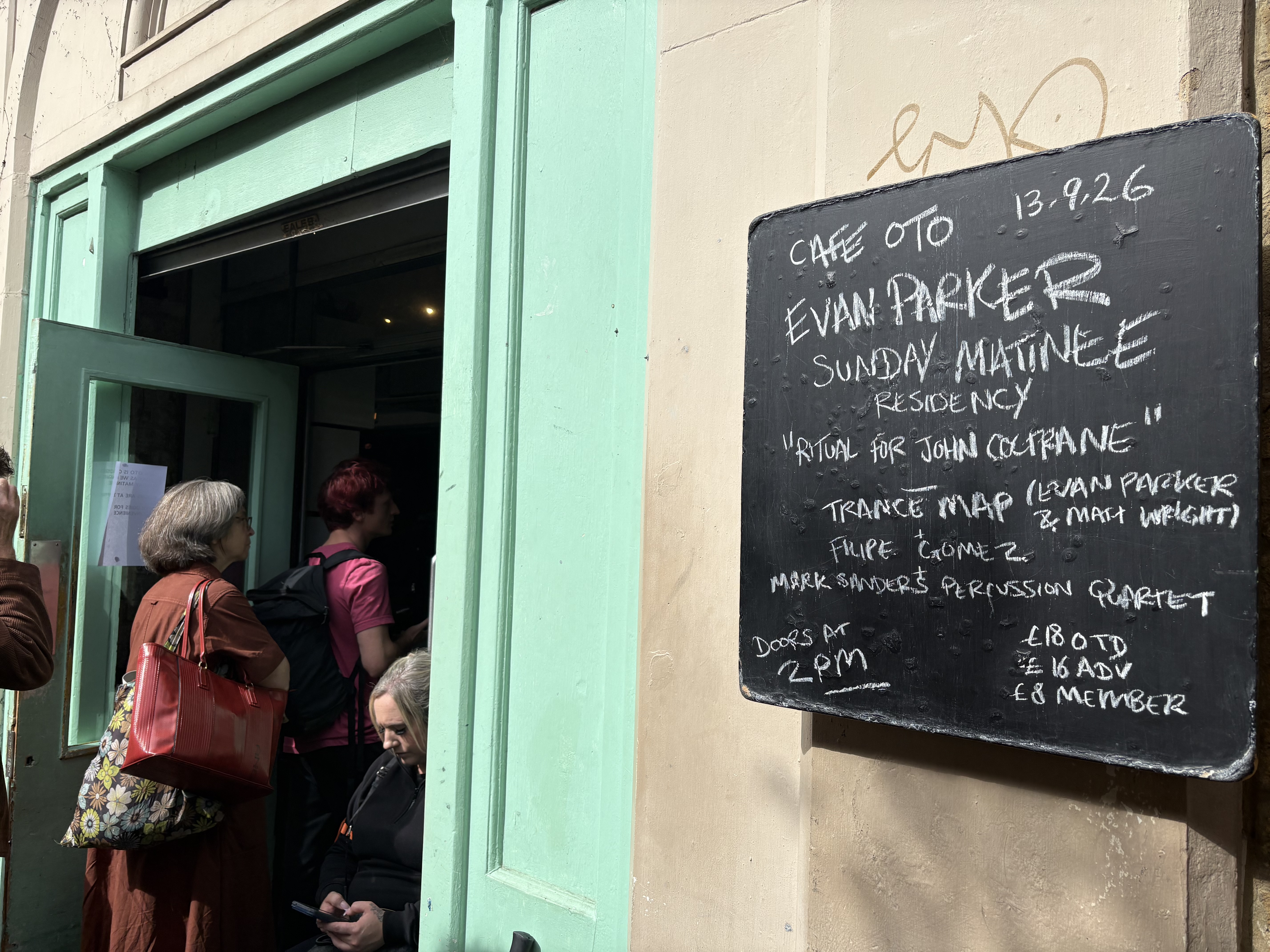
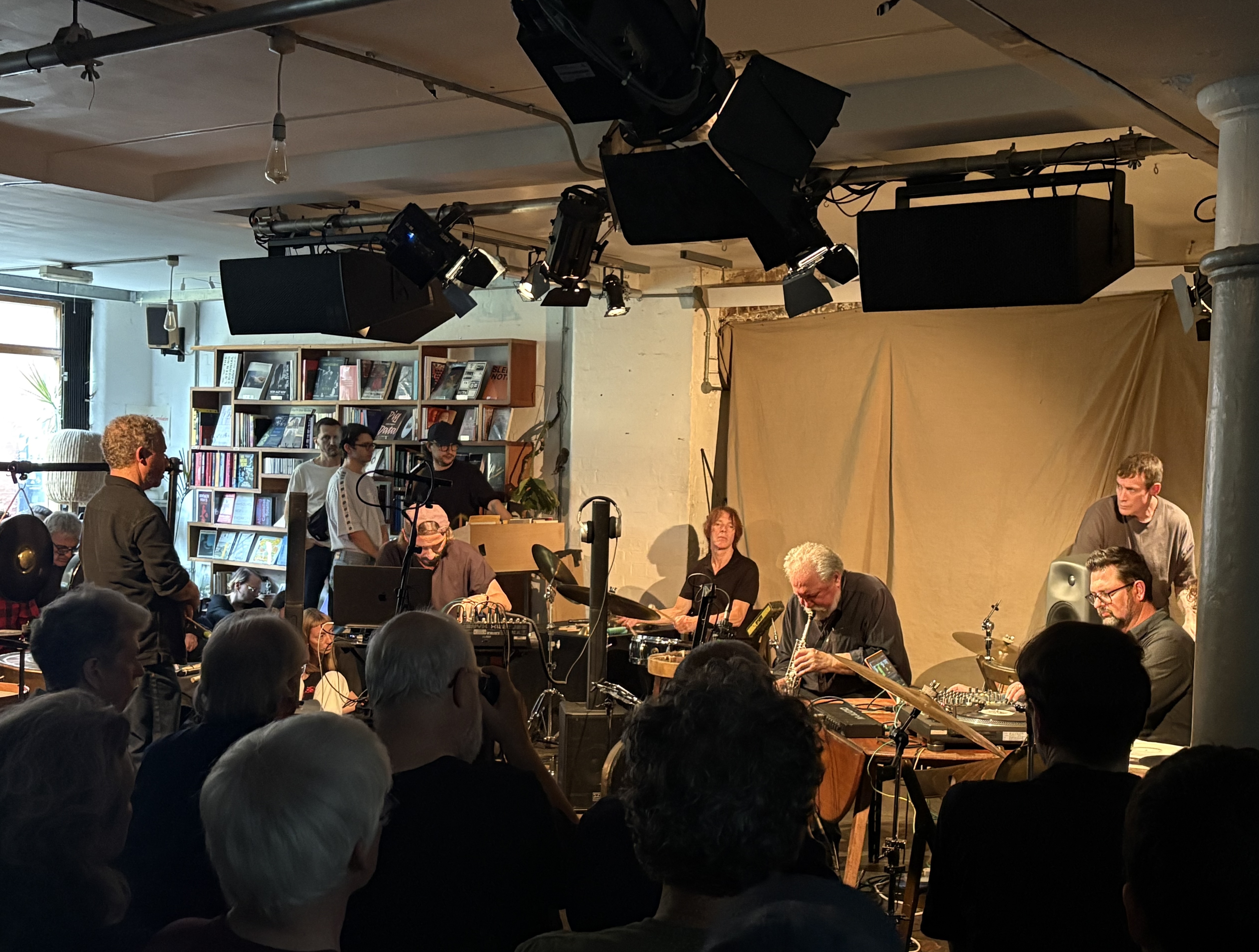
 The centenary of John Coltrane’s birth in Hamlet, North Carolina falls later this month; many commemorative events will take place. Yesterday afternoon at Cafe Oto, in the first of four monthly Sunday matinee concerts, Evan Parker led something he titled ‘A Ritual for John Coltrane’, which turned out to be the sort of tribute that summons the spirit of the dedicatee without trying to mimic the substance. I may have mentioned before that the first time I interviewed Evan, at his home in the early ’70s, I was impressed by a shelf of LPs with orange and black spines: Coltrane’s albums on Impulse, of course, in their original US editions. Over the years I learned more about his love of the great man’s work, and the inspirational effect it had on the development of his own playing. Yesterday Evan sat at the centre of an expanded performance space, with his soprano saxophone and a suspended gong. He was flanked by Matt Wright, his partner in Trance Map, at a table with a laptop and a turntable, and by Filipe Gomes of Ramsgate’s Arco Barco studio, also with a laptop and other electronic devices. At the four corners of the space were a quartet of percussionists assembled by Mark Sanders, himself standing at an array of larger gongs, cymbals and small upturned bass drums, with Miles Levin, Jim Bashford and Tymek Jozwiak each seated at minimal kits of varying configurations. After the room had fallen silent, Evan began proceedings by striking the gong. His strokes precipitated a very gradual accretion of sounds from the other players, creating an abstract tapestry of rustles, taps, pings and other noises, with the subtle infiltration of electronic sounds at its base. After many minutes of this, and a fade to a silence in which we heard Coltrane’s voice speaking about his desire for growth as a person, Evan picked up his soprano and began the first of several improvisations against the constantly shifting sound-quilt. He is 82 now, more than twice as old as Coltrane was when he died in 1967. Yet his playing is still mesmerising in its unquenchable flow of invention, based on all the techniques of blowing and fingering developed over the decades and powered by circular breathing as well as a constantly active imagination. I suppose you could trace it back to… [TheTopNews] Read More.2 weeks ago
THE BLUE MOMENT – Music Commentary | This, That and The Other