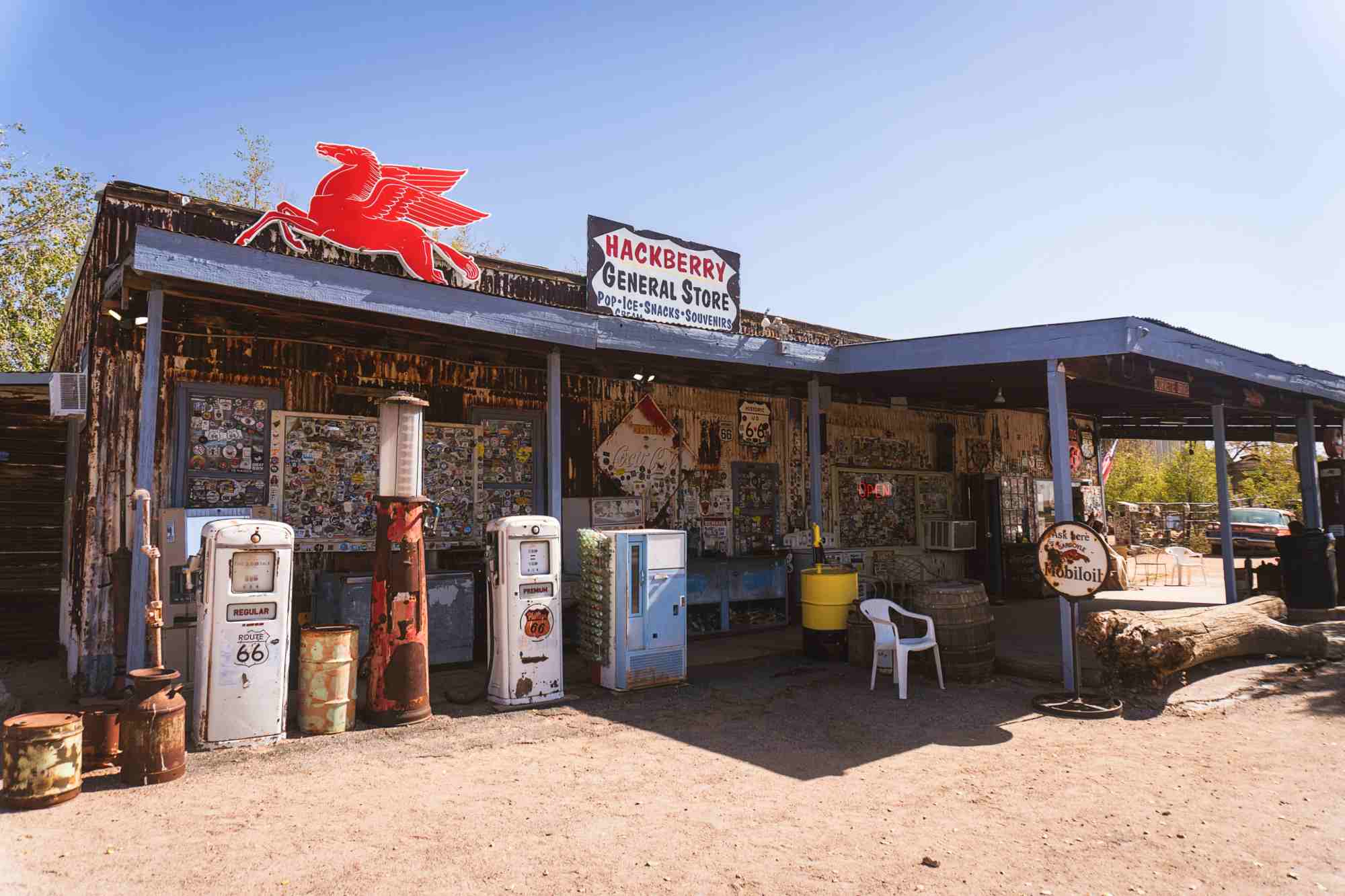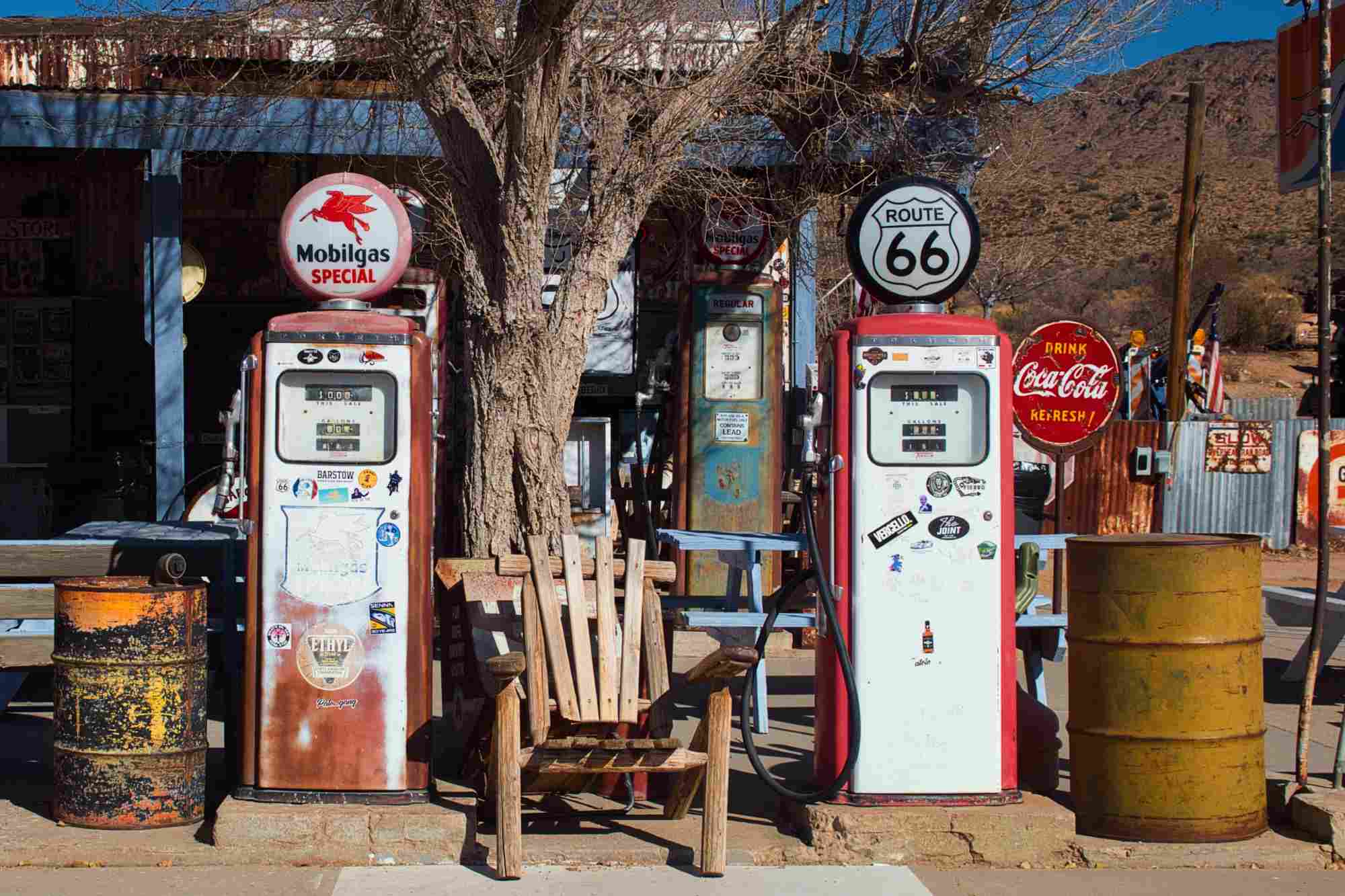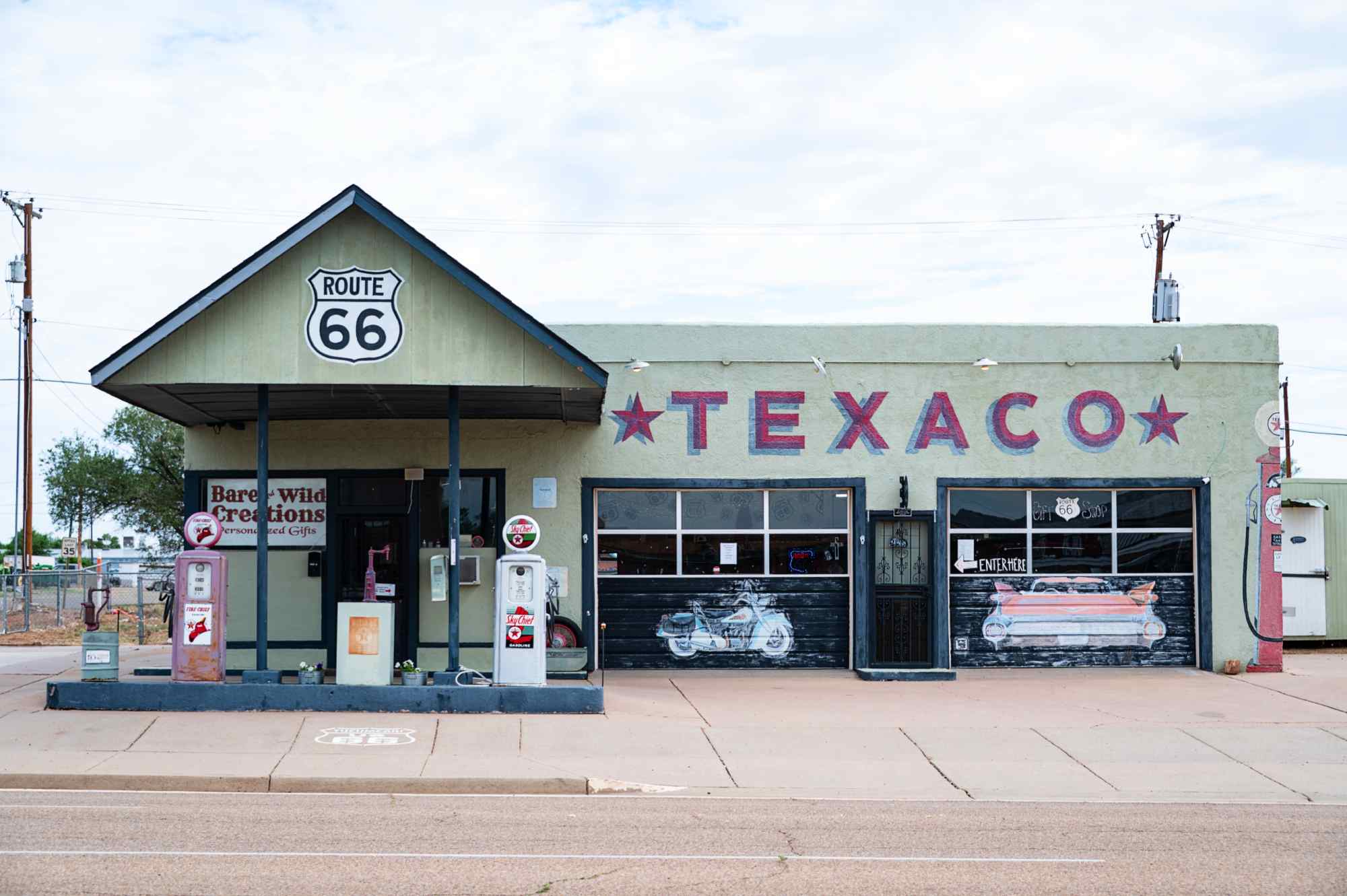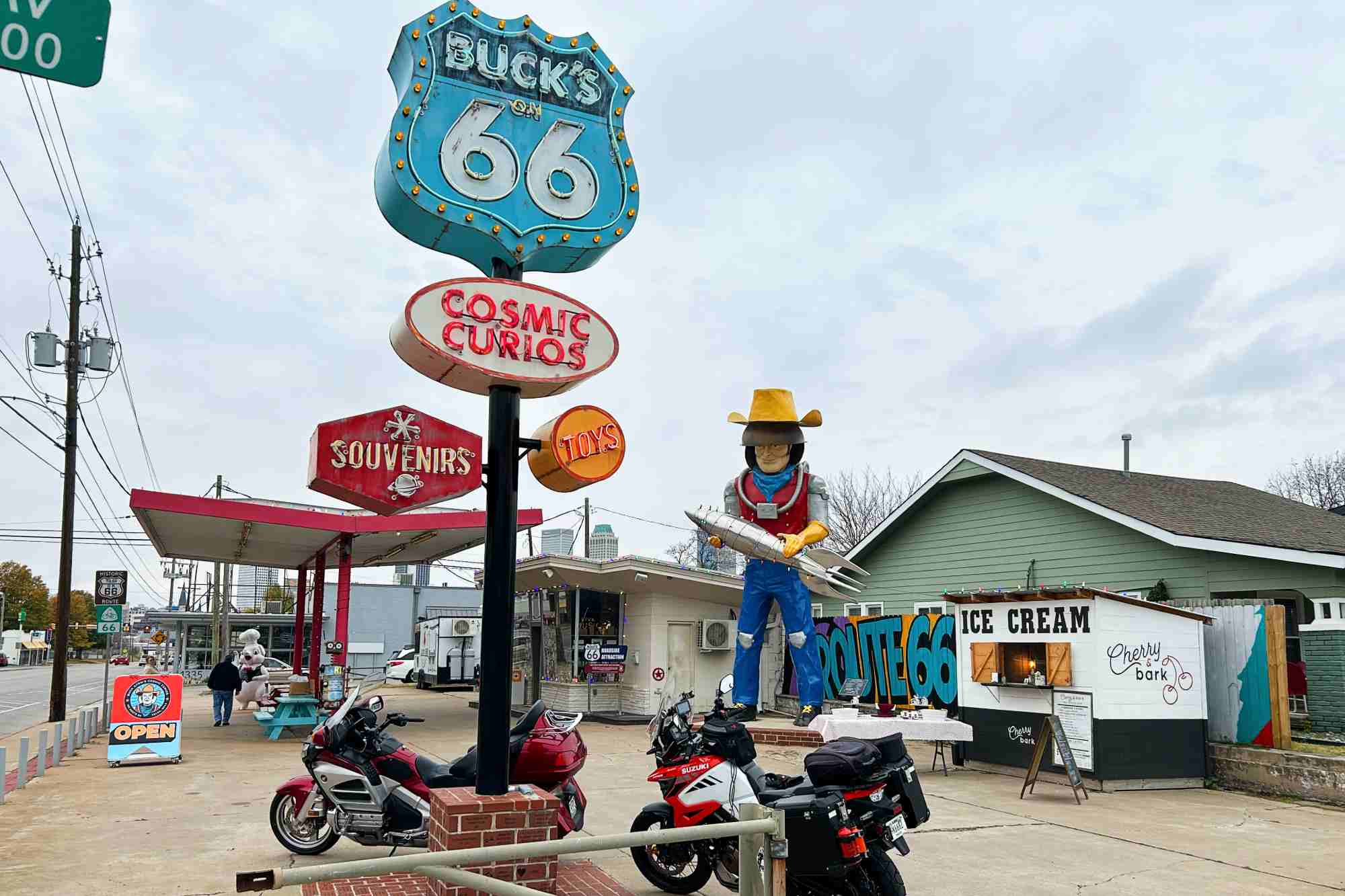

Gas stations serve a critical role in a country as car-dependent as the United States. Along interstates, they offer travelers a place to fuel up, get a bite to eat, and use the facilities. In small towns or areas without other nearby businesses, gas stations serve as small grocery stores where customers can grab essentials. Some are even attached to museums and historical sites, giving travelers a reason to pull over and spend some money. In Route 66’s heyday, fuel stops functioned a little differently than they do today. In the early 20th century, automobile drivers and motorcyclists bought their fuel from places like pharmacies and hardware stores, either sold in cans or out of barrels. As vehicular travel became more popular and people began driving and riding farther distances, the need for quick roadside fuel arose. The earliest gas stations were little more than barrels housed in rough sheds beside the road. By the mid-1920s and into the 1930s, fuel companies saw an opportunity to sell more gas by catering to long-distance travelers with a welcoming roadside experience. Thus the service station was born. Service stations offered more than just fuel. The whole experience was about service. Attendants would pump fuel, wash windshields, inspect tires and oil level, and perform other maintenance tasks. The cottage-style service stations that replaced poorly constructed roadside fuel sheds gave travelers a chance to stretch their legs, purchase maps, ask for directions, learn local knowledge from helpful attendants, and share stories with fellow road trippers. In many ways, service stations made long-distance automobile and motorcycle travel not only possible but practical. On no stretch of road was this level of care more important than on the long miles between Chicago and Los Angeles. Like the motor courts and eateries that popped up to serve travelers along Route 66, service stations brought much needed revenue to small communities and essential services to those passing through them. When Route 66 was decommissioned, businesses that were born in response to increased travel along the route suffered, including service stations. Many were abandoned and left to crumble over time. Some were transformed into other businesses to meet new needs. Some were demolished to make way for something new. Luckily, a few have survived the decades and been preserved or restored to give travelers a chance to peel back the curtain… [TheTopNews] Read More.
2 weeks ago