





Searchable News & Info From Reliable Online Sources.
- Ex-Spouses Of Former ‘GMA’ Hosts Who Just Got Married Make Big Annou...
 Andrew Shue, former husband of Amy Robach, is now engaged to Marilee Fiebig, the former wife of T.J. Holmes. [TheTopNews] Read More.2 days ago
 - Rail excursion
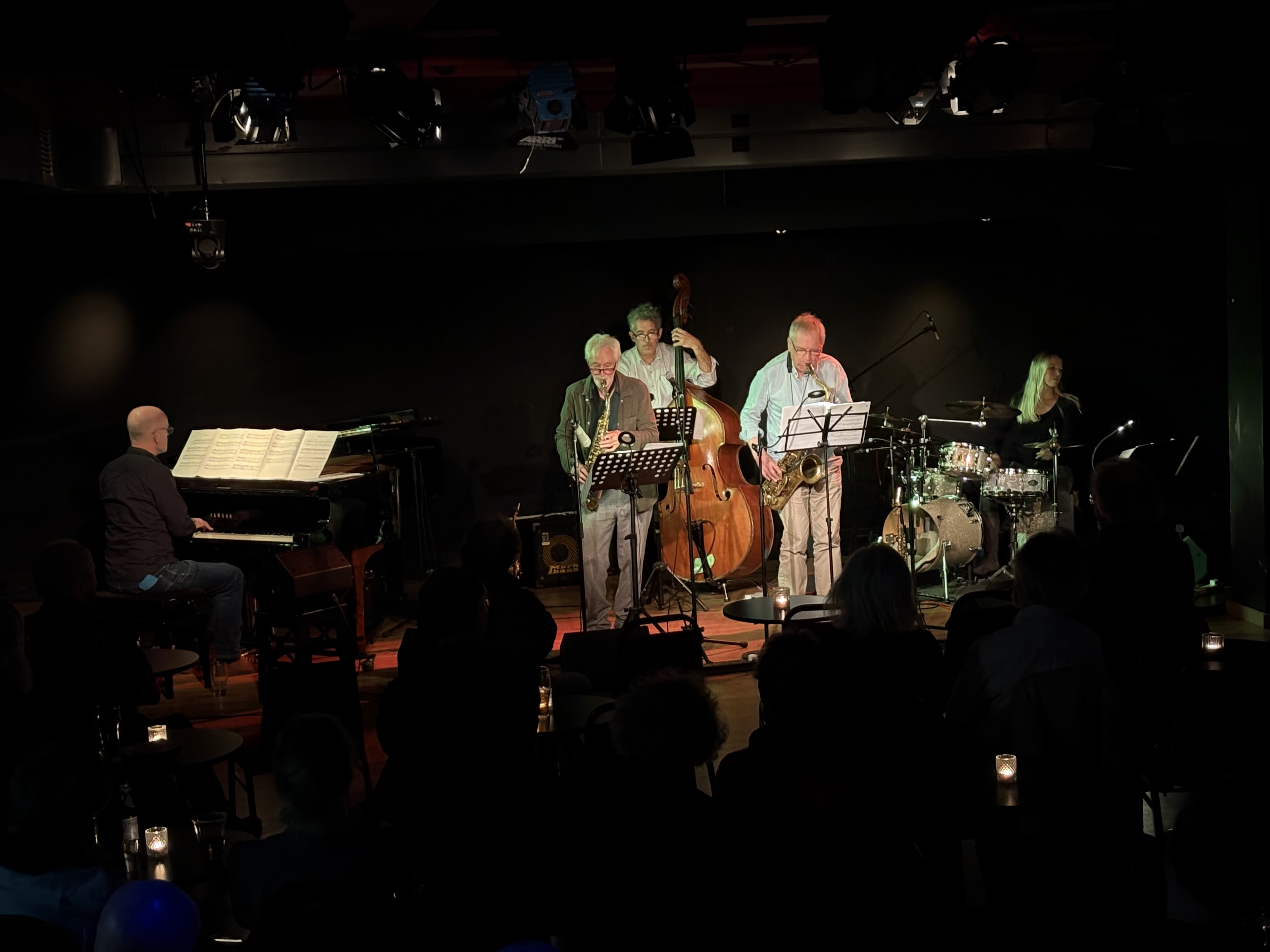
 Not often do I begin a review with a recommendation for the venue’s catering. In fact never, until now. But the Jazz Café POSK, situated in London’s Polish cultural centre on King Street in Hammersmith, extends a hospitality that includes its restaurant, where before last night’s gig by the Wobbly Rail Five I had a plate of herring with potato salad and a large slice of apple pie with cinnamon — all delicious — and came out with change from 15 quid. In his days as a college radio DJ, Lou Reed titled his programme Excursion on a Wobbly Rail, after a tune on Cecil Taylor’s 1959 LP Looking Ahead. Ten years ago Wobbly Rail Five became the name of an occasional quintet fronted by the British saxophonists and long-time associates Chris Biscoe and Pete Hurt, with Liam Noble on piano and Steve Watts on bass. When they made an album in 2016, it was with Jon Scott on drums. Last night at POSK the drums were in the hands of Sophie Alloway. It’s an interesting little group, playing quite intricate compositions that require sheet music and fairly intense concentration, occupying a part of the jazz spectrum also inhabited by Thelonious Monk and Herbie Nichols. Last night’s repertoire, based on the album, included Monk’s “Played Twice” (arranged for two sopranos, as if in homage to the group the late Steve Lacy once led with a second soprano, Steve Potts), along with pieces by Biscoe, Hurt and Noble, most of them including a nod to the high priest of bebop somewhere in their contours. Noble is particularly good at that kind of thing, and his solos were notable for the strength of their angular architecture. Alloway responded brilliantly to the challenge of providing the detailed arrangements with the sort of cues and punctuations more normally required in a big band than a small combo, while retaining the intimacy of the conversation, swinging beautifully along with Watts and adding particularly effective cymbal textures. Irregularly assembled, the band sounded a little stiff to start with but eventually eased into the evening in front of a smallish but enthusiastic audience, the horns warning up with Biscoe’s liquid soprano on Hurt’s woozy ballad “Lost for Words” and Hurt’s tenor digging into the contours of Noble’s “Ask Your Mother”, which bopped along like a soul-jazz tune with a dash of… [TheTopNews] Read More.6 days ago
 - A vote of confidence
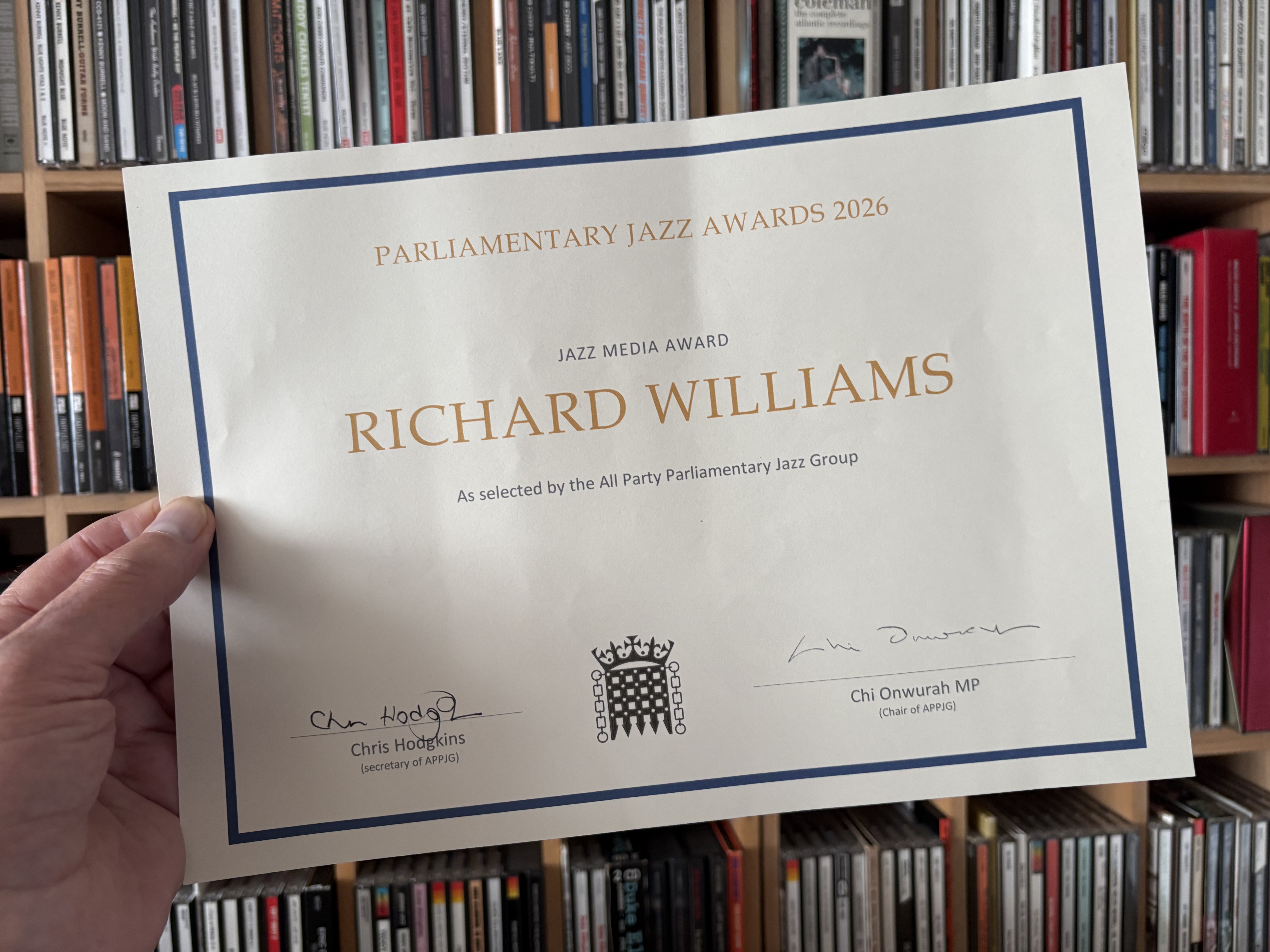
 Last night I was honoured to be in the company of Yazz Ahmed, Donovan Haffner, Knats, Heidi Vogel, Iain Ballamy, Olivia Cuttill, Jean Toussaint and others as recipients of the 2026 Parliamentary Jazz Awards. The event took place at World Heartbeat, a venue close to the new US Embassy in Nine Elms. It was the 21st year of the awards, given by the All Party Parliamentary Jazz Group, and I was delighted to be given the Jazz Media Award. As one does, I gave a short acceptance speech in which I said that 64 years ago, aged 15, I came runner-up in the Daily Telegraph‘s Junior Jazz Critic competition, and I’ve been trying to do better ever since. The Telegraph‘s senior jazz critic at the time was Philip Larkin, a great poet but a very iffy jazz critic: enthusiastic about the early stuff in a duffel-coat-and-college-scarf sort of way, he detested almost anything modern (sample phrase: “the passionless creep of a Miles Davis solo”). He was one of those critics who decided pretty early on that things aren’t what they used to be. That, I said, is not how I feel. Things are tough for anyone who chooses to play jazz for a living, particularly in cash-strapped Britain, where libraries and humanities courses are under threat, but the music itself is thriving, particularly among young players. When it comes to signs of life, I could give lots of examples, but the one I chose was this, and it came to me last week, on a evening when I heard Melissa Aldana, the Chilean saxophonist, at the Wigmore Hall after spending the day writing a sleeve note for the next album by the Welsh saxophonist Rachel Musson, both wonderful improvisers. Sixty-odd years ago, when I was devouring the Melody Maker and Down Beat in order to learn about this music, the names of only two female jazz saxophonists ever cropped up. One was the British tenorist Kathy Stobart, the other the American altoist Vi Redd, both useful players. After that, in the ’70s, there was Barbara Thompson. Now, though, I could name you 30 or 40 world-class female jazz saxophonists without pausing for breath. And the same is true for other instruments. Anyway, it was nice to get the piece of paper, and I’m grateful to the people who organise the awards, which are undoubtedly a good thing… [TheTopNews] Read More.1 week ago
 - The Island story, pt 3
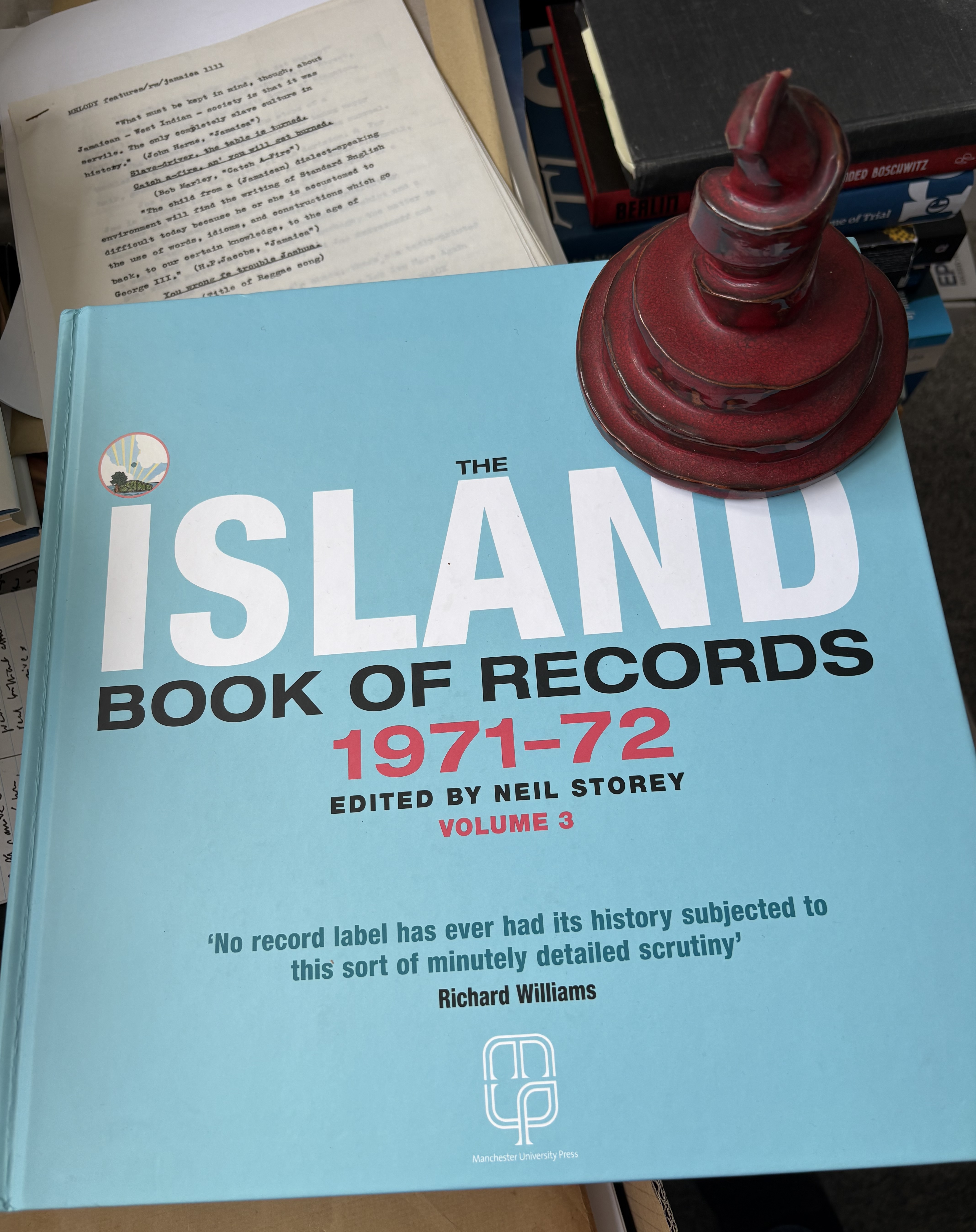
 Every year or so there’s a little reunion of people who worked at Island Records in its early and earlyish days, held in a pub near the offices in St Peter’s Square, Hammersmith, to which the company moved in 1973. The most recent of these family affairs was a week ago, and it coincided with the publication of the third volume of Neil Storey’s mammoth Island Book of Records, an illustrated oral history of just about everything that went on to make the label what it was and became. Mammoth in the depth of research that goes into documenting every release on the label and its associates, albums and singles, no matter how seemingly insignificant, and mammoth also in its sheer physical proportions. Each volume is 12 inches by 12 inches, hardbound with sturdy covers and good paper. This one has 480 pages, and you would not want to carry it up too many flights of stairs. It covers only two years, 1971-72, when the company was headquartered in Basing Street, Notting Hill, but what years they were: Traffic’s John Barleycorn, King Crimson’s Islands, Fairport Convention’s John Babbacombe Lee, Free Live!, the first solo albums from Sandy Denny, Richard Thompson and Jim Capaldi, Cat Stevens’s Teaser and the Firecat and Catch Bull at Four, Nick Drake’s Bryter Later and Pink Moon, the Harder They Come soundtrack, and the debut of Roxy Music. Also a torrent of albums from the sort of bands that ZigZag readers loved: Spooky Tooth, Mott the Hoople, Free, Quintessence, Uriah Heep, the Incredible String Band, Vinegar Joe, Juicy Lucy and Bronco. Not to mention Claire Hamill, the Sutherland Brothers and Amazing Blondel. And Emerson, Lake & Palmer. Storey’s interviewees range from musicians, backing singers and executives to promotion people and sales representatives, designers and photographers. Everyone has interesting stories to tell, be they founder Chris Blackwell, A&R chief Muff Winwood, the producers Joe Boyd and Paul Samwell-Smith, the art director Ann Sullivan (a rare woman at this stage of the story), the photographer Brian Cooke, the publisher Lionel Conway or the engineers in the label’s studios, including Phill Brown, Tony Platt and Richard Digby Smith. There are frequents shafts of illumination, like the great engineer/producer John Wood on John Martyn: “John always wanted to be something he wasn’t.” Or the late Mike Kellie of Spooky Tooth, summing up Island’s early-’70s vibe by… [TheTopNews] Read More.1 week ago
 - Birdsong in Dalston
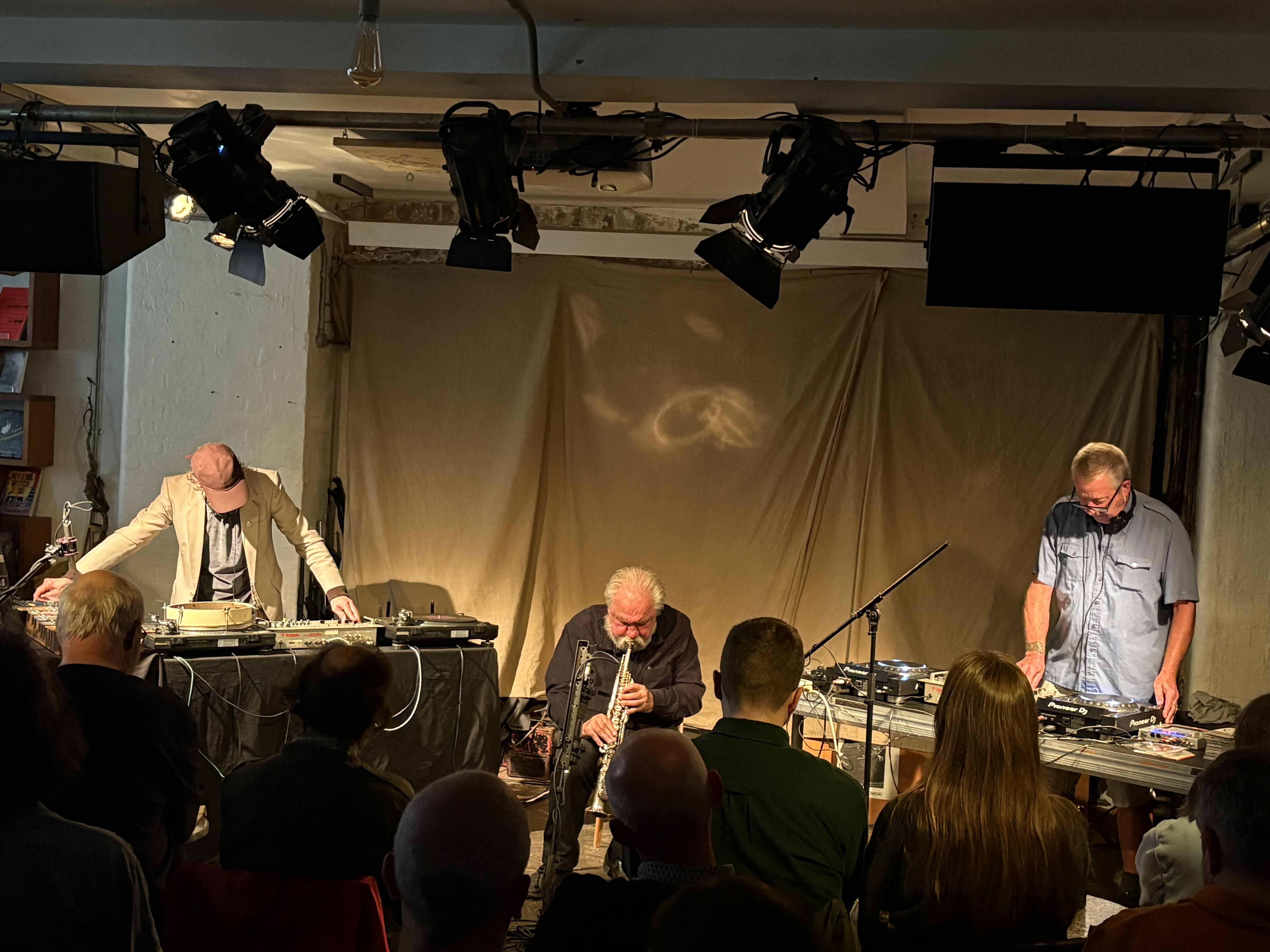
 After spending some of the morning reading a piece on biodiversity by Simon Barnes in the Observer, I felt properly primed for the second of Evan Parker’s three matinees at Cafe Oto. Simon, an old colleague at The Times, was writing brilliantly about species diversity. His special subject is birds; he can tell the song of a willow warbler from that of a chiffchaff, just as I can (I hope) tell the sound of Fats Navarro from that of Clifford Brown. Whereas the dawn chorus around my suburban home vanished several years ago, in rural Suffolk he is able to log the sounds of 21 different bird species before breakfast. This afternoon’s performance in Dalston was billed as Evan Parker / John Coxon / Ashley Wales: “With Birds”. Together, Coxon and Wales are known as Spring Heel Jack, manipulating electronics and turntables in order to provide unorthodox and stimulating settings for free improvisers of the first generation (their album John Tchicai with Strings, released on their own Treader label in 2005, is a classic). They have collaborated with Evan on many occasions, and today’s concert was a live iteration of another Treader album, Evan Parker with Birds, released in 2004. Today Parker had brought his soprano saxophone and was flanked by Coxon at one table, stage right, and Wales at another, stage left. Wales seemed to trigger most of the birdsong during the one-hour set, but he and Coxon both contributed to the electronic sound bed that supported and encouraged Evan’s improvisations. To begin with, Evan seemed to be responding directly to the calls of various birds. But when, with about 20 minutes gone, Coxon began striking a small handbell and a xylophone with a light mallet, Evan reacted by turning on the afterburners and delivering quite the most astonishing extended solo I can remember hearing from him: one of those improvisations of his in which each phrase seems to overlap the one before it (and, thanks to his use of circular breathing, there are no breaks between them). It was astonishingly powerful, and I got the feeling that it transfixed everyone else in the crowded room, too. And then over the remainder of the set he did it twice more, not quite with the same degree of intensity but varying his attack and trajectory as first Coxon set up a repeated figure on… [TheTopNews] Read More.2 weeks ago
 - Another Lifetime
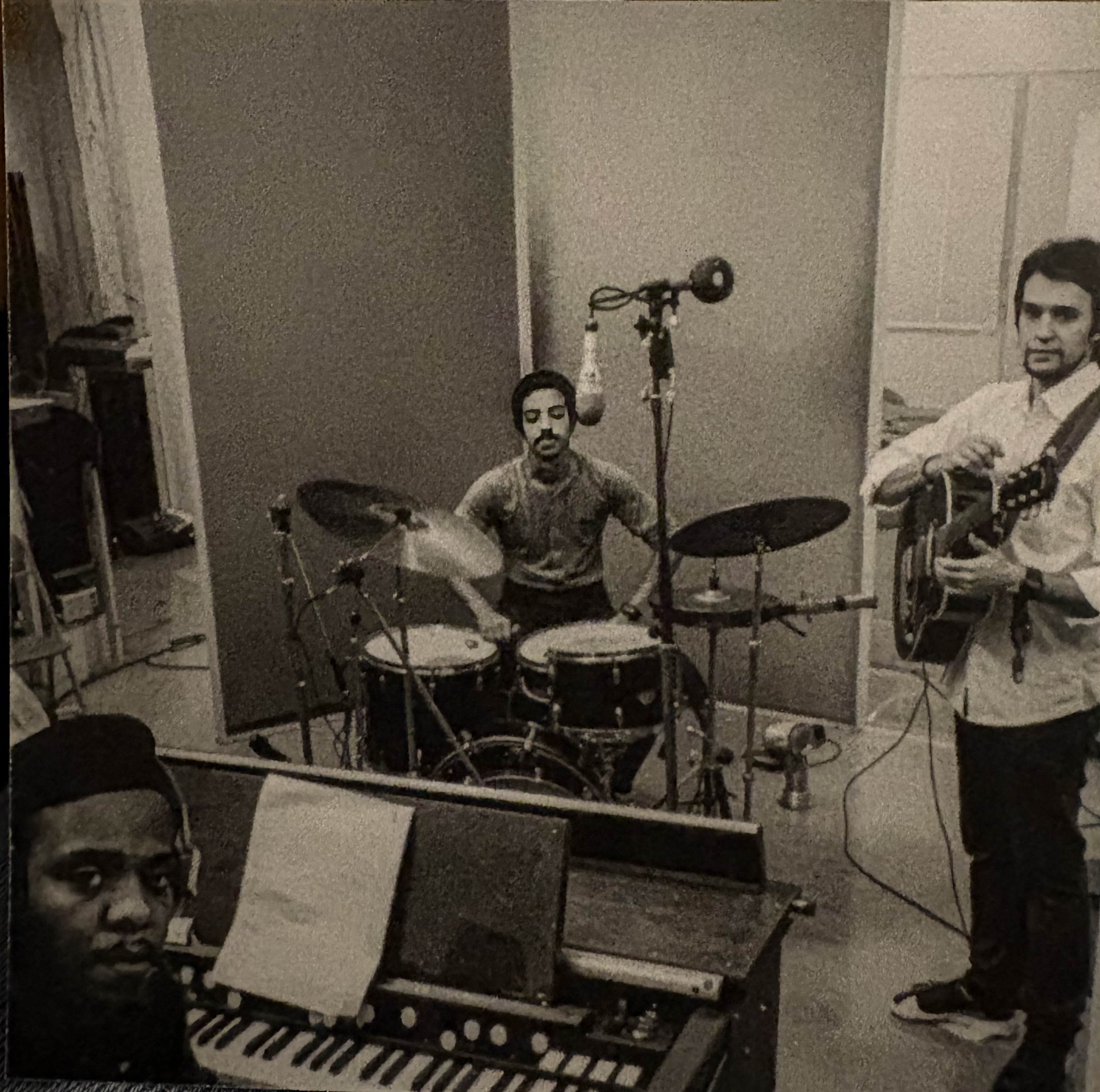
 Fifty-odd years later, the original version of Tony Williams’ Lifetime remains the most exciting band I ever saw. At Ungano’s in New York in the autumn of 1970, the three-piece Lifetime, with Larry Young on Hammond organ and John McLaughlin on guitar, produced a howling noise that seemed to take music into the next dimension. It was jazz, it was rock, it was somehow psychedelic, it was all of those things and none of them, with the burners turned right up. In that time and place, made by a trio of innovators, it was the sort of music that made you reach for the word ‘beyond’. It also made everyone else’s attempts at some kind of jazz-rock fusion sound like Muzak. Their double-album, Emergency!, had created a bit of a stir, but its appeal was seriously undermined by very dubious sound quality, as if they’d used poor-quality equipment and had left the final mix to the studio cat, and then pressed the result on twice-recycled vinyl. Listening to it was a bit of an ordeal, which is not how it should have been at all. The day after I saw them, I interviewed Tony in his manager’s office. He was less than communicative, something I reflected in the piece I wrote for the Melody Maker, suggesting that it might have been at least in part the fault of my stupid questions. He was reading the newspaper as I walked in and said hello, and he barely looked up from it for the duration of our talk. It wasn’t a lack of sympathy on my part. I’d been an admirer since he became the drummer in the Miles Davis Quintet seven years earlier, aged 17. I’d devoured the albums he’d made for Blue Note, both under his own name and with people such as Jackie McLean, Eric Dolphy and Andrew Hill. Maybe it was me, maybe it was the day, maybe (as I took the liberty of suggesting in my piece) he was still learning how to handle fame. Whatever, I left in disappointment but with just about enough to turn into something publishable. When I asked him about the murky sound quality of Emergency!, mentioning that someone close enough to know had told me it came out exactly the way he wanted, he gave a somewhat puzzling response: ‘Oh no, that’s… [TheTopNews] Read More.3 weeks ago

The Searchable USWebDaily.com and TheTopNews NewsBank Helps You Be Better Informed, Faster! Spread The Word.