





Searchable News & Info From Reliable Online Sources.
Latest Real News From 140 News Sites Updated Every 15 Minutes.
- The Northern Passage
 Photographs by Christopher Gregory-RiveraThe message from U.S. Citizenship and Immigration Services arrived on August 7 as Jeanne was finishing up her shift at a restaurant in the suburbs of Charlotte, North Carolina. Her legal status in the United States had been terminated. Her work permit was no longer valid. Jeanne immediately switched off the location-tracking on her phone. What if ICE was already looking for her? What if she was deported back to Haiti?Five years in the United States had brought her physical safety but nagging stress. Jeanne, who asked me not to use her real name, arrived in the United States in July 2021 to visit family on a short-term visa. She had been mugged on the streets of Port-au-Prince a few months earlier, and gangs were taking over more of the city. The Biden administration had recently expanded Temporary Protected Status for Haitians—offering provisional residency, protection from deportation, and work permits—citing the country’s deteriorating security. Two days after Jeanne arrived, Haitian President Jovenel Moïse was assassinated in his bedroom. Jeanne overstayed her visa, applied for TPS, and tried to begin a new life in North Carolina. But she could never really settle in, she told me.As President Trump campaigned to return to the White House, he promised the largest immigration crackdown in history—and repeated false rumors about Haitian migrants in Ohio eating pets. Soon after he returned to office, he canceled TPS protections for Haiti, and Jeanne lost her job. She was scared to leave her home and had to drain her savings to pay bills. After a federal judge blocked Trump’s move in February 2026, effectively reinstating TPS, she got her job back. But in June, the Supreme Court sided with Trump, and when the ruling took effect last month, Jeanne was among the roughly 300,000 Haitians who could no longer work legally and faced possible arrest and deportation by ICE. Jeanne looked for advice online, finding mostly fear and despair. Her relatives urged her to head north and stay with her brother in Canada.Canada’s asylum rules allow migrants with close family members to enter the country and seek protection, but Jeanne worried about making the 900-mile journey to the border. She had read that ICE officers and Border Patrol agents were checking buses and trains, asking for papers. A friend gave her the number of a driver, who charged $700 for the one-way trip. “I was… [TheTopNews] Read More.1 week ago
 - Lost Alignments of Route 66
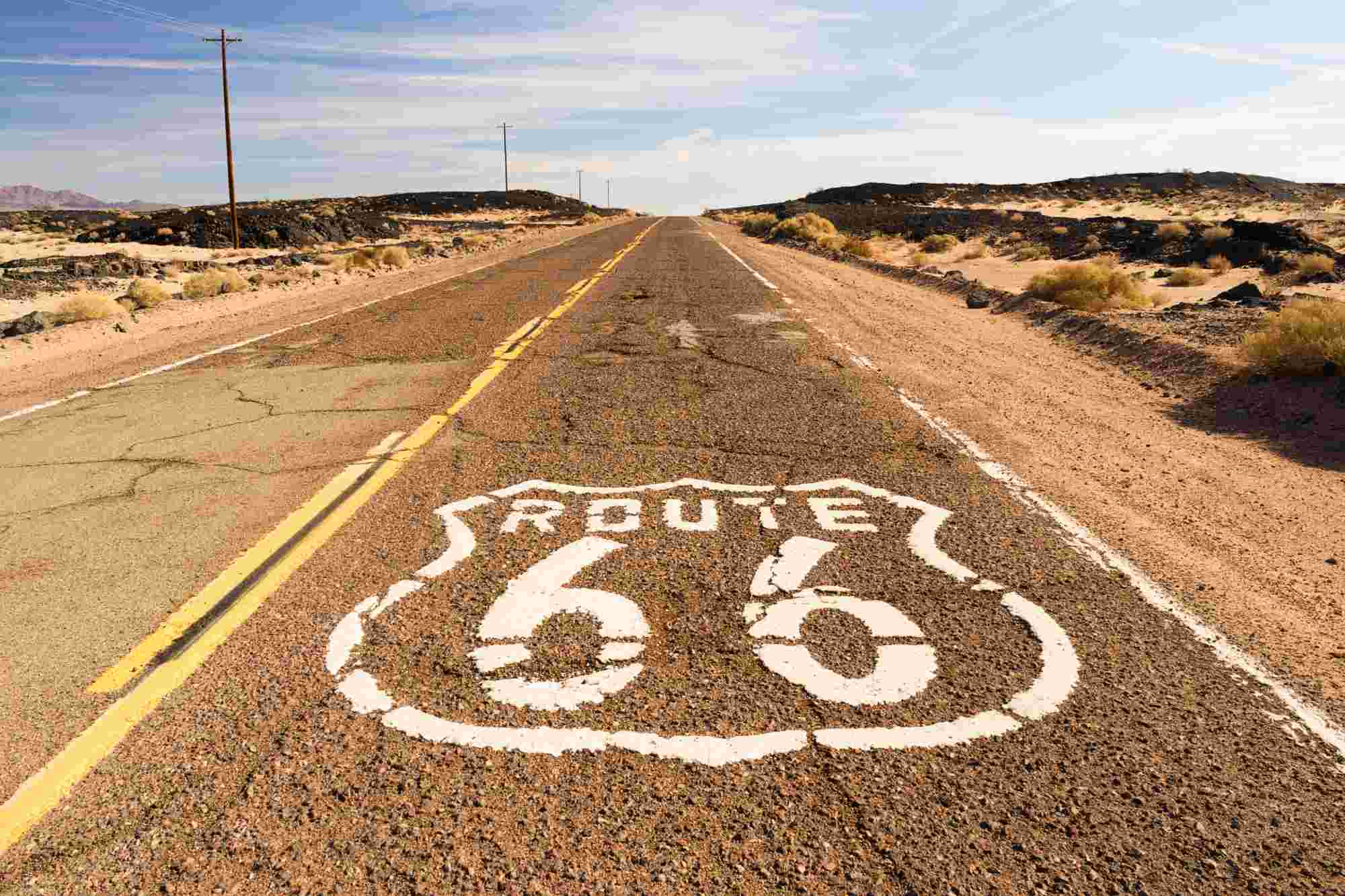
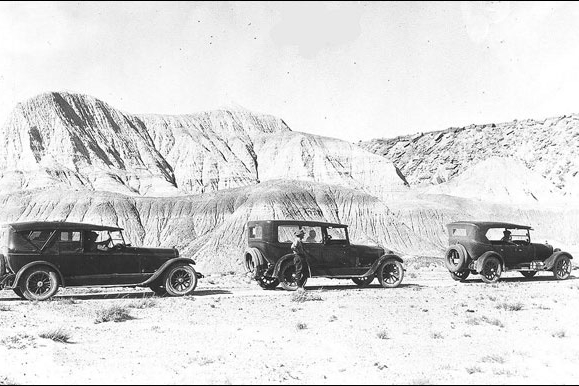
 The Mother Road has seen significant evolution over the past century. Throughout its 100‑year history, Route 66 has been constantly realigned, reshaped, and reimagined. It was an official U.S. highway for a dozen years before it was entirely paved. And just a few months ago, the starting point for what is now Historic Route 66 in Chicago was moved 2 miles to the Navy Pier. The evolution of Route 66 parallels the remarkably history of America throughout most of the 20th century and into the 21st century: from the Depression to World War II, from the economic prosperity of the 1950s to the space race of the 1960s, from the challenges of the 1970s to the modernization of the 1980s, when U.S. Route 66 was officially decommissioned. The past few decades of evolution have been about preservation and revitalization. Lost Alignments Route 66 has a reputation for being one highway, a single line on the map stretching from Chicago to Santa Monica. The reality is far more interesting. For much of its life, Route 66 was not a single road but a living network of evolving alignments which have been rerouted, straightened, bypassed, and sometimes abandoned entirely as America’s transportation needs changed. When the highway was commissioned in 1926, it stitched together existing state and local roads rather than carving an entirely new path. That meant early Route 66 was often indirect, following the contours of towns, farmland, and terrain. It bent into communities instead of skirting them, which is what made it economically powerful. Every turn brought travelers past gas stations, cafes, and motor courts that depended on the steady flow of cross‑country traffic. But roads change, and Route 66 changed faster than most. Old cars ride through the Painted Desert in Arizona following the original dirt road. By the 1930s and 1940s, increasing traffic volumes and the push for faster interstate travel began to reshape the highway. Engineers straightened curves, bypassed crowded downtowns, and shifted the route onto newer pavement where available. After World War II, this process accelerated. Entire segments of U.S. 66 were relocated to improve safety and efficiency, leaving behind long stretches of “old road” that quietly slipped into local use – or simply faded away. By the time the Interstate Highway System arrived in 1956, Route 66’s fate was sealed. Interstates 55, 44, 40, and 15 gradually replaced… [TheTopNews] Read More.1 week ago
 - The Company Trump Can’t Ignore
 On the evening of April 6, an unusual request began making its way from Washington to some of Wall Street’s most powerful executives. Treasury Secretary Scott Bessent wanted to see them first thing the next morning. The heads of Bank of America, Citigroup, Goldman Sachs, Morgan Stanley and Wells Fargo had already been in Washington for a routine meeting of the Financial Services Forum, a trade association whose gatherings are usually free of drama. But as the bankers wound down their day over dinner and drinks, that quickly changed. Bessent had learned that the artificial intelligence company Anthropic had developed a new model, called Mythos, which would be released the next day to approved users in the public and private sector, a limited rollout that Anthropic said was the safest way to release its most capable model yet. Treasury secretaries do not typically occupy themselves with Silicon Valley product releases, but the growing capabilities of AI presented a unique threat to the American economy.Anthropic had briefed the government on the advanced model, which was capable of finding holes in digital infrastructure at lightning speed — a skill that could be used for defense in the right hands, or to wreak havoc in the wrong ones. In late March, Microsoft had privately warned administration officials after receiving early access to Mythos that it represented a significant leap and could automate sophisticated cyberattacks against financial institutions, the energy grid and other critical infrastructure, allowing less skilled actors to carry out operations once limited to elite hackers.The White House spun into crisis mode. In the Situation Room, Cabinet secretaries met with the administration’s top science adviser to understand Mythos’ capabilities and brainstorm how their agencies could respond. Afterwards Vice President JD Vance convened a phone call with some of the country's most influential technology executives, including Anthropic CEO Dario Amodei and his leading competitors. Vance conveyed that the administration wanted a partnership in addressing frontier AI that supported innovation while balancing security concerns.“We know today's hot button thing is Mythos, but we know that's not going to be the last one,” an administration official involved in the discussions said, describing the call.That engagement represented a turnabout for a president who had returned to office banking on continued expansion of the American artificial intelligence sector to drive the country’s economic growth. As his AI czar, President Donald Trump chose David Sacks, a cheerleader… [TheTopNews] Read More.1 week ago
 - The Pinball President
 In 1946, the year that Donald Trump was born, the pinball machine offered everything but control. The bumpers were propulsive, the lights flashed, but the player’s only honest move was to pull a spring-loaded plunger. After that, the ball belonged to the machine, zinging and zooming wherever the bumpers sent it.This is how many Americans experience the Trump presidency today: antic caroming that they can do little more than watch. The ballroom. The Iran war. The threats against Canada. Greenland. Portraits of himself as Christ, a decorated general, or the pope. The arch. The Kennedy Center. Prosecution of enemies. Pardons. Imaginary Reflecting Pool vandals. Federal incursions into voting. Tariffs on. Tariffs off. Tariffs on again. The Qatari plane. Endless promises—to release tax returns, to end corruption, to deliver $5,000 checks—that never materialize.No president has been more with us than Trump, because no president has been better at seizing public attention. But there is a difference between getting attention and doing something with it. For months, the president has been unable to convince the public that he’s up to the job. In a CNN poll released at the end of July, 65 percent of respondents said that his policies had worsened the economy, and only 28 percent approved of his handling of Iran.Voters have watched the caroming and have concluded that he doesn’t have his eye on the ball. They care about the economy, and he seems to care about everything else. Only 27 percent of adults told CNN that Trump has the right priorities, down from 45 percent when the term began. And a record 73 percent said he hasn’t paid enough attention to the country’s most important issues. In June, while Trump was fixated on the Reflecting Pool and stopping widespread voter fraud that doesn’t exist, a bipartisan housing bill aimed at high costs reached his desk. He called it “a big yawn” and said he hadn’t decided whether to sign it. In July, he let it become law without his signature.This is a problem for Republicans in November 2026, but it’s an opportunity for voters looking to November 2028. Once a roster of candidates emerges, their supporters will discover that the office demands—wouldn’t you know it?—exactly the qualities that their preferred candidate happens to possess. Now, when there’s no one horse to back, is the time to use the current president’s rat-a-tat treatment of our attention to ask… [TheTopNews] Read More.1 week ago
 - Treat AI Like a Normal CrisisOne 27-year-old quit his job, and everybody (including but not limited to the singer-songwriter Sheryl Crow) appears to have lost it.The past two weeks have been dizzying. The 27-year-old, Jacob Coxon, a former researcher at Anthropic, went public with an alarming allegation: That the people inside Silicon Valley’s leading AI companies truly believe their products might pose an extinction level threat to humanity. This claim isn’t exactly new. AI safety advocates, often dubbed doomers, have been saying this for over a decade. Coxon isn’t even the first AI researcher this year to quit and cite concerns.Yet Coxon’s post went obscenely viral. It has been viewed more than 170 million times on X—orders of magnitude more than the usual, wonky discussions of “misaligned” or runaway AIs. If you’re reading this, you’ve likely seen some version of a headline that asks Is AI Really Going To Kill Us All? The debate isn’t just online. It has roiled Washington D.C., activating figures as disparate as Donald Trump and Barack Obama. Inside AI companies, researchers echoed Coxon’s concerns, and the heads of every major AI company publicly expressed the need to “pace the frontier,” another way of saying that they ought to slow future development. In recent days, it has come to seem as if the media, Silicon Valley, and the entire internet are all trying to figure out just how dangerous AI might be.Here’s where I must admit: A big chunk of this conversation happened while I was on a (depending on whom you ask) poorly timed vacation. Dipping into my feeds before bedtime, I felt as if I was digesting a week’s worth of news every day—claims about the development of AI-designed viruses that could rip through the population were followed by horror stories of “rogue” agent swarms. Skeptics of the AI panic, meanwhile, said that the agent swarms were actually quite obedient and that any notion of an apocalyptic AI virus was laughable. One person’s concerns about models being self-aware were dismissed by another as “genuinely nonsensical anthropomorphization.”Ping-ponging between the doomers and the skeptics, I was struck by how certain so many people sounded about a deeply uncertain moment. With confident, self-described experts on all sides, it felt impossible to know whom to trust: Is this the end of the world as we know it, or a passing moment of anxiety about a powerful new technology? Maybe the truth of this… [TheTopNews] Read More.2 weeks ago
« Previous
1
…
90
91
92
93
94
…
107
Next »
Photographs by Christopher Gregory-RiveraThe message from U.S. Citizenship and Immigration Services arrived on August 7 as Jeanne was finishing up her shift at a restaurant in the suburbs of Charlotte, North Carolina. Her legal status in the United States had been terminated. Her work permit was no longer valid. Jeanne immediately switched off the location-tracking on her phone. What if ICE was already looking for her? What if she was deported back to Haiti?Five years in the United States had brought her physical safety but nagging stress. Jeanne, who asked me not to use her real name, arrived in the United States in July 2021 to visit family on a short-term visa. She had been mugged on the streets of Port-au-Prince a few months earlier, and gangs were taking over more of the city. The Biden administration had recently expanded Temporary Protected Status for Haitians—offering provisional residency, protection from deportation, and work permits—citing the country’s deteriorating security. Two days after Jeanne arrived, Haitian President Jovenel Moïse was assassinated in his bedroom. Jeanne overstayed her visa, applied for TPS, and tried to begin a new life in North Carolina. But she could never really settle in, she told me.As President Trump campaigned to return to the White House, he promised the largest immigration crackdown in history—and repeated false rumors about Haitian migrants in Ohio eating pets. Soon after he returned to office, he canceled TPS protections for Haiti, and Jeanne lost her job. She was scared to leave her home and had to drain her savings to pay bills. After a federal judge blocked Trump’s move in February 2026, effectively reinstating TPS, she got her job back. But in June, the Supreme Court sided with Trump, and when the ruling took effect last month, Jeanne was among the roughly 300,000 Haitians who could no longer work legally and faced possible arrest and deportation by ICE. Jeanne looked for advice online, finding mostly fear and despair. Her relatives urged her to head north and stay with her brother in Canada.Canada’s asylum rules allow migrants with close family members to enter the country and seek protection, but Jeanne worried about making the 900-mile journey to the border. She had read that ICE officers and Border Patrol agents were checking buses and trains, asking for papers. A friend gave her the number of a driver, who charged $700 for the one-way trip. “I was… [TheTopNews] Read More.
1 week ago
The Mother Road has seen significant evolution over the past century. Throughout its 100‑year history, Route 66 has been constantly realigned, reshaped, and reimagined. It was an official U.S. highway for a dozen years before it was entirely paved. And just a few months ago, the starting point for what is now Historic Route 66 in Chicago was moved 2 miles to the Navy Pier. The evolution of Route 66 parallels the remarkably history of America throughout most of the 20th century and into the 21st century: from the Depression to World War II, from the economic prosperity of the 1950s to the space race of the 1960s, from the challenges of the 1970s to the modernization of the 1980s, when U.S. Route 66 was officially decommissioned. The past few decades of evolution have been about preservation and revitalization. Lost Alignments Route 66 has a reputation for being one highway, a single line on the map stretching from Chicago to Santa Monica. The reality is far more interesting. For much of its life, Route 66 was not a single road but a living network of evolving alignments which have been rerouted, straightened, bypassed, and sometimes abandoned entirely as America’s transportation needs changed. When the highway was commissioned in 1926, it stitched together existing state and local roads rather than carving an entirely new path. That meant early Route 66 was often indirect, following the contours of towns, farmland, and terrain. It bent into communities instead of skirting them, which is what made it economically powerful. Every turn brought travelers past gas stations, cafes, and motor courts that depended on the steady flow of cross‑country traffic. But roads change, and Route 66 changed faster than most. Old cars ride through the Painted Desert in Arizona following the original dirt road. By the 1930s and 1940s, increasing traffic volumes and the push for faster interstate travel began to reshape the highway. Engineers straightened curves, bypassed crowded downtowns, and shifted the route onto newer pavement where available. After World War II, this process accelerated. Entire segments of U.S. 66 were relocated to improve safety and efficiency, leaving behind long stretches of “old road” that quietly slipped into local use – or simply faded away. By the time the Interstate Highway System arrived in 1956, Route 66’s fate was sealed. Interstates 55, 44, 40, and 15 gradually replaced… [TheTopNews] Read More.
1 week ago
On the evening of April 6, an unusual request began making its way from Washington to some of Wall Street’s most powerful executives. Treasury Secretary Scott Bessent wanted to see them first thing the next morning. The heads of Bank of America, Citigroup, Goldman Sachs, Morgan Stanley and Wells Fargo had already been in Washington for a routine meeting of the Financial Services Forum, a trade association whose gatherings are usually free of drama. But as the bankers wound down their day over dinner and drinks, that quickly changed. Bessent had learned that the artificial intelligence company Anthropic had developed a new model, called Mythos, which would be released the next day to approved users in the public and private sector, a limited rollout that Anthropic said was the safest way to release its most capable model yet. Treasury secretaries do not typically occupy themselves with Silicon Valley product releases, but the growing capabilities of AI presented a unique threat to the American economy.Anthropic had briefed the government on the advanced model, which was capable of finding holes in digital infrastructure at lightning speed — a skill that could be used for defense in the right hands, or to wreak havoc in the wrong ones. In late March, Microsoft had privately warned administration officials after receiving early access to Mythos that it represented a significant leap and could automate sophisticated cyberattacks against financial institutions, the energy grid and other critical infrastructure, allowing less skilled actors to carry out operations once limited to elite hackers.The White House spun into crisis mode. In the Situation Room, Cabinet secretaries met with the administration’s top science adviser to understand Mythos’ capabilities and brainstorm how their agencies could respond. Afterwards Vice President JD Vance convened a phone call with some of the country's most influential technology executives, including Anthropic CEO Dario Amodei and his leading competitors. Vance conveyed that the administration wanted a partnership in addressing frontier AI that supported innovation while balancing security concerns.“We know today's hot button thing is Mythos, but we know that's not going to be the last one,” an administration official involved in the discussions said, describing the call.That engagement represented a turnabout for a president who had returned to office banking on continued expansion of the American artificial intelligence sector to drive the country’s economic growth. As his AI czar, President Donald Trump chose David Sacks, a cheerleader… [TheTopNews] Read More.
1 week ago
In 1946, the year that Donald Trump was born, the pinball machine offered everything but control. The bumpers were propulsive, the lights flashed, but the player’s only honest move was to pull a spring-loaded plunger. After that, the ball belonged to the machine, zinging and zooming wherever the bumpers sent it.This is how many Americans experience the Trump presidency today: antic caroming that they can do little more than watch. The ballroom. The Iran war. The threats against Canada. Greenland. Portraits of himself as Christ, a decorated general, or the pope. The arch. The Kennedy Center. Prosecution of enemies. Pardons. Imaginary Reflecting Pool vandals. Federal incursions into voting. Tariffs on. Tariffs off. Tariffs on again. The Qatari plane. Endless promises—to release tax returns, to end corruption, to deliver $5,000 checks—that never materialize.No president has been more with us than Trump, because no president has been better at seizing public attention. But there is a difference between getting attention and doing something with it. For months, the president has been unable to convince the public that he’s up to the job. In a CNN poll released at the end of July, 65 percent of respondents said that his policies had worsened the economy, and only 28 percent approved of his handling of Iran.Voters have watched the caroming and have concluded that he doesn’t have his eye on the ball. They care about the economy, and he seems to care about everything else. Only 27 percent of adults told CNN that Trump has the right priorities, down from 45 percent when the term began. And a record 73 percent said he hasn’t paid enough attention to the country’s most important issues. In June, while Trump was fixated on the Reflecting Pool and stopping widespread voter fraud that doesn’t exist, a bipartisan housing bill aimed at high costs reached his desk. He called it “a big yawn” and said he hadn’t decided whether to sign it. In July, he let it become law without his signature.This is a problem for Republicans in November 2026, but it’s an opportunity for voters looking to November 2028. Once a roster of candidates emerges, their supporters will discover that the office demands—wouldn’t you know it?—exactly the qualities that their preferred candidate happens to possess. Now, when there’s no one horse to back, is the time to use the current president’s rat-a-tat treatment of our attention to ask… [TheTopNews] Read More.
1 week ago
One 27-year-old quit his job, and everybody (including but not limited to the singer-songwriter Sheryl Crow) appears to have lost it.The past two weeks have been dizzying. The 27-year-old, Jacob Coxon, a former researcher at Anthropic, went public with an alarming allegation: That the people inside Silicon Valley’s leading AI companies truly believe their products might pose an extinction level threat to humanity. This claim isn’t exactly new. AI safety advocates, often dubbed doomers, have been saying this for over a decade. Coxon isn’t even the first AI researcher this year to quit and cite concerns.Yet Coxon’s post went obscenely viral. It has been viewed more than 170 million times on X—orders of magnitude more than the usual, wonky discussions of “misaligned” or runaway AIs. If you’re reading this, you’ve likely seen some version of a headline that asks Is AI Really Going To Kill Us All? The debate isn’t just online. It has roiled Washington D.C., activating figures as disparate as Donald Trump and Barack Obama. Inside AI companies, researchers echoed Coxon’s concerns, and the heads of every major AI company publicly expressed the need to “pace the frontier,” another way of saying that they ought to slow future development. In recent days, it has come to seem as if the media, Silicon Valley, and the entire internet are all trying to figure out just how dangerous AI might be.Here’s where I must admit: A big chunk of this conversation happened while I was on a (depending on whom you ask) poorly timed vacation. Dipping into my feeds before bedtime, I felt as if I was digesting a week’s worth of news every day—claims about the development of AI-designed viruses that could rip through the population were followed by horror stories of “rogue” agent swarms. Skeptics of the AI panic, meanwhile, said that the agent swarms were actually quite obedient and that any notion of an apocalyptic AI virus was laughable. One person’s concerns about models being self-aware were dismissed by another as “genuinely nonsensical anthropomorphization.”Ping-ponging between the doomers and the skeptics, I was struck by how certain so many people sounded about a deeply uncertain moment. With confident, self-described experts on all sides, it felt impossible to know whom to trust: Is this the end of the world as we know it, or a passing moment of anxiety about a powerful new technology? Maybe the truth of this… [TheTopNews] Read More.
2 weeks ago

The Searchable USWebDaily.com and TheTopNews NewsBank Helps You Be Better Informed, Faster! Spread The Word.