






Searchable News & Info From Reliable Online Sources.
Latest Real News From 140 News Sites Updated Every 15 Minutes.
- Coltrane at 100
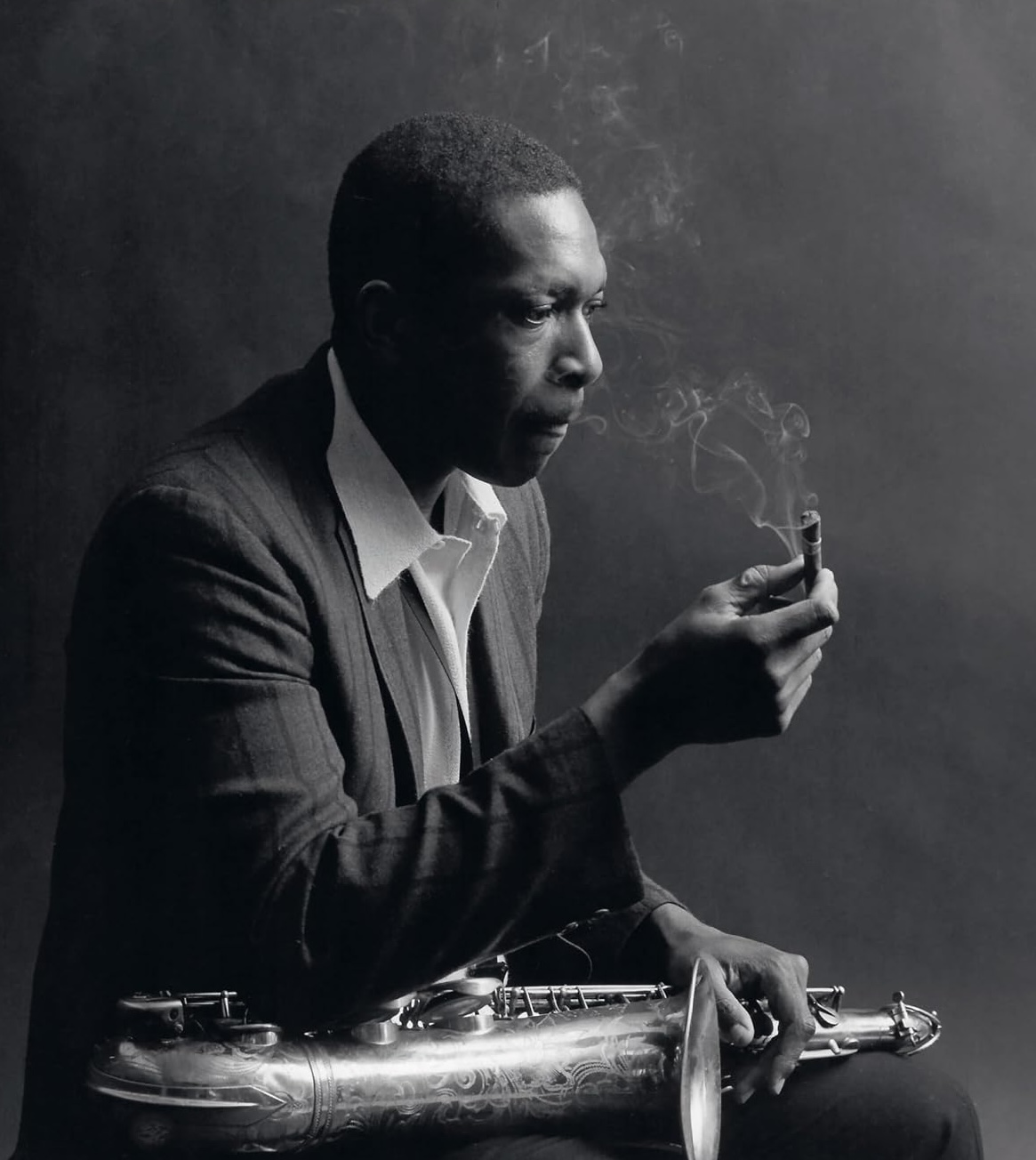
 I loved jazz as soon as I discovered it, but it was when I heard John Coltrane that I realised it could take me to a different place. That would have been around 1960, and the first thing I heard was his solo on Miles Davis’s “Milestones”, on an EP. Then I used the money from my paper round to buy another EP, this time released under Coltrane’s own name. Issued in the UK on the Esquire label, it paired “Bass Blues” and “You Leave Me Breathless” from his third studio album for Prestige, recorded in 1957. These were fairly conventional performances but I already knew, from reading Down Beat, that he was heading somewhere else. Soon there would be Coltrane Plays the Blues and Olé, which made that new direction very clear. From the very start, though, there was that sound. You can hear it in the opening notes of his solo on “Bass Blues”. It was like nothing you’d ever heard before. Nothing like Lester Young or Dexter Gordon or Sonny Rollins. It spoke in a different way, to a different part of the brain. It wasn’t pretty in any normal sense. But it was immediately and transcendentally beautiful. Even then, it seemed to be searching for something beyond the tune, beyond the notes. I couldn’t put it into words then and I still can’t. I’ve never read anybody who really could. Today, 23 September 2026, is the centenary of Coltrane’s birth. I could have listened to any of the favourites — the album with Monk from Carnegie Hall, “Mr Syms”, “Impressions”, “Africa”, “Alabama”, the whole of A Love Supreme, Crescent and Expressions — but instead I chose to honour his memory by listening to two of his most challenging albums, Om and Kulu Se Mama, both from 1965, They’re the sort of thing that gave critics the ammunition with which to attack his entire career, and 60 years later they still sound chaotic, beyond all structure and restraint and explanation, the product of a man searching for something beyond himself. His death in 1967 robbed us of the chance to get answers from Coltrane himself, either i words or in his playing, to the questions raised by his later music. What did it all mean? That’s something we have to work out for ourselves. What I can give is… [TheTopNews] Read More.3 weeks ago
 - He Ran New Orleans After Katrina. Will He Run for President?
 AVONDALE, Louisiana — If I could only have one dinner in New Orleans, it would be at Mosca's. Yes, my favorite New Orleans spot isn't technically in the city. That's part of the charm. And that's why I went there last week, sitting down with former Mayor Mitch Landrieu at a groaning table filled with Oysters Mosca, Chicken a la Grande and a couple of meatballs An unremarkable-looking red sauce roadhouse perched on the side of Highway 90 — New Orleans is one way and Acadiana the other — Mosca's somehow manages to be both a hidden gem and bucket-list icon. Those who know know, as the saying goes. After opening in 1946, it was a fun, cash-only spot for a pair of couples or groups of friends. A young local reporter named Walter Isaacson reviewed it at the time — his clip is still framed on the wall. Then in 2010, Calvin Trillin wrote a love letter and Oysters Mosca became foodie famous. Alongside the chicken, with its garlic bath, the pasta bordelaise, the crab-speckled dinner salad and to-die-for shrimp, Mosca's became such a destination that it's common to see sprinter vans filled with epicurious pilgrims in the gravel-and-grass highway frontage. This is an Italian Creole mecca — yes, that's its own food genre— and it neatly captures the singularity of New Orleans. (I know what you're thinking: Red sauce in New Orleans?) This city is in the South but not fully of the South, closer spiritually and ethnically to fellow port towns around the world than Bible Belt burgs a couple hours north. Since marrying a native, and eventually moving here, I've described New Orleans as one part Deep South, one part Caribbean and one part Western Europe. Thankfully, and tragically, it has the vices and virtues of all three. But I’m a transplant, so I’ll let Landrieu riff about his town. This is where his dad was once mayor, too, and his sister represented Louisiana in the U.S. Senate. Landrieu was first in state politics, serving as lieutenant governor of Louisiana and then mayor of New Orleans from 2010 to 2018. Most recently, though, he served in Washington as former President Joe Biden’s infrastructure czar. Together we talked about New Orleans, Democratic politics, why he's uneasy about the DSA and why he thinks he, and not Pete Buttigieg, could've been the breakout mayor-turned-presidential-candidate in 2020. Laissez les… [TheTopNews] Read More.3 weeks ago
 - October 2026
 The October 2026 issue of Rider Magazine has arrived! On the cover: Cruising down the streets of St. Augustine, Florida, aboard the Royal Enfield Classic 650. Photo by Royal Enfield Subscribe Now Additional stories in the October 2026 issue of Rider Magazine. Keeping it Classic | First Ride2026 Royal Enfield Classic 650 Track-Bred, Street-Legal | First Ride2026 KYM 990 Duke R Unknown Utah | On The RoadFinding hidden gems in the Beehive State Moto History | Pure MotorcyclingThe secrets behind Royal Enfield’s 125-year run Central Arizona | Favorite RideRising from the fire And more! The post October 2026 appeared first on Rider Magazine. [TheTopNews] Read More.3 weeks ago
 - Republicans’ Cash Blitz Meets a $5-Gas ElectionRepublican polling has so deteriorated this month that the only uncertainty remaining ahead of the midterms is the depth of the party’s losses. With early or mail ballot voting beginning in nearly half the country this week, that question will mainly be determined by which money matters more: the massive cash infusion from GOP groups into every competitive race or the price of gasoline soaring toward $5 a gallon.The spending advantage could mitigate Republican losses, especially in suddenly vulnerable precincts of red-state America. Yet those advertising dollars may be effectively nullified if the price of unleaded and diesel continues rising and grips the public’s attention more than any commercial.What’s clear is that GOP candidates are in a race against time.That urgency was on vivid display Monday when Mike Rogers of Michigan and Ashley Hinson of Iowa, Republicans running in two of the country’s most crucial Senate races, each said it was time to end the war.Multiple Republican lawmakers and strategists told me that their fate will be determined between now and early next month, by which point they’ll know if their onslaught of spending arrested the Democrats’ gains.“If there’s movement by the second week of October, we’ll know we’re in good shape,” said Rep. Mike Lawler (R-N.Y.), who’s locked in one of the tightest races in the country. “Republicans always outperform their polling.”The cavalry can’t come soon enough for many Republicans. And, in fact, the money from President Donald Trump’s super PAC may have arrived too late. The high cost of living and a deepening fatigue with Trump’s self-obsession were cementing opinions about the midterms at the worst possible time for the GOP — in the critical weeks after Labor Day.“The bottom's beginning to fall out,” one House Republican from a blood-red district told me. Trump is even underwater in this lawmaker’s seat, which the president carried overwhelmingly two years ago. “We have money that we've never had before, but they have every strategic advantage in their direction, and the president's made it worse — nobody in my district cares about the Kennedy Center, arches or the Reflecting Pool, all this nonsense,” said this GOP member.The unpopular war and its impact on gas prices are the biggest drivers of voter dissatisfaction; the national average for regular unleaded was $4.48 a gallon as of Monday, according to GasBuddy. Yet not far behind is a recognition, even among the most loyal Republicans,… [TheTopNews] Read More.3 weeks ago
- Lost Alignments of Route 66
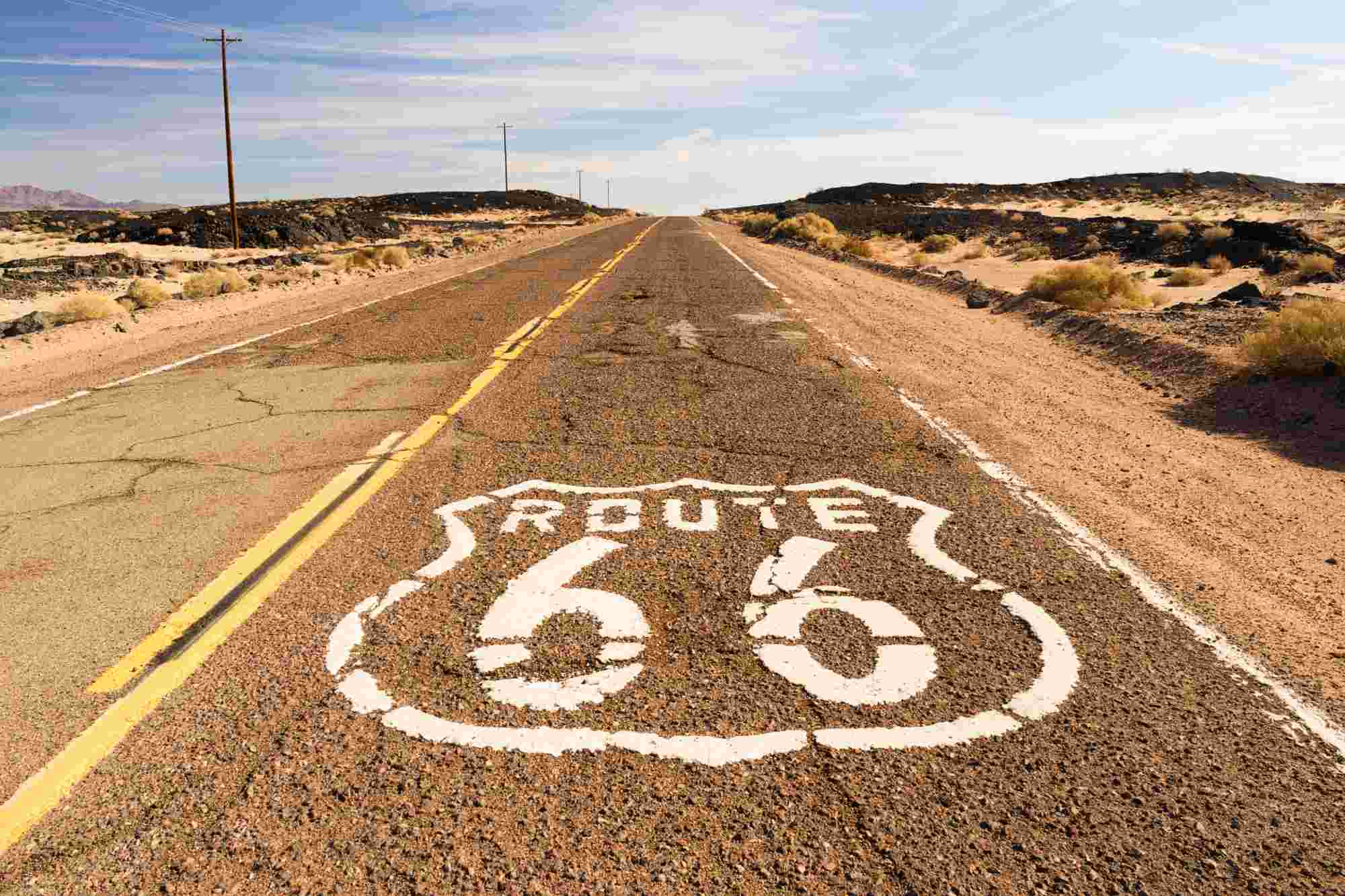
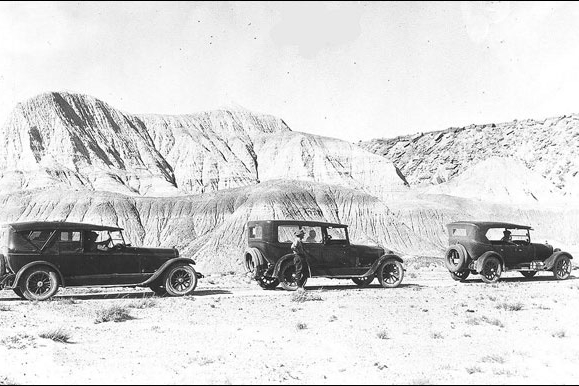
 The Mother Road has seen significant evolution over the past century. Throughout its 100‑year history, Route 66 has been constantly realigned, reshaped, and reimagined. It was an official U.S. highway for a dozen years before it was entirely paved. And just a few months ago, the starting point for what is now Historic Route 66 in Chicago was moved 2 miles to the Navy Pier. The evolution of Route 66 parallels the remarkably history of America throughout most of the 20th century and into the 21st century: from the Depression to World War II, from the economic prosperity of the 1950s to the space race of the 1960s, from the challenges of the 1970s to the modernization of the 1980s, when U.S. Route 66 was officially decommissioned. The past few decades of evolution have been about preservation and revitalization. Lost Alignments Route 66 has a reputation for being one highway, a single line on the map stretching from Chicago to Santa Monica. The reality is far more interesting. For much of its life, Route 66 was not a single road but a living network of evolving alignments which have been rerouted, straightened, bypassed, and sometimes abandoned entirely as America’s transportation needs changed. When the highway was commissioned in 1926, it stitched together existing state and local roads rather than carving an entirely new path. That meant early Route 66 was often indirect, following the contours of towns, farmland, and terrain. It bent into communities instead of skirting them, which is what made it economically powerful. Every turn brought travelers past gas stations, cafes, and motor courts that depended on the steady flow of cross‑country traffic. But roads change, and Route 66 changed faster than most. Old cars ride through the Painted Desert in Arizona following the original dirt road. By the 1930s and 1940s, increasing traffic volumes and the push for faster interstate travel began to reshape the highway. Engineers straightened curves, bypassed crowded downtowns, and shifted the route onto newer pavement where available. After World War II, this process accelerated. Entire segments of U.S. 66 were relocated to improve safety and efficiency, leaving behind long stretches of “old road” that quietly slipped into local use – or simply faded away. By the time the Interstate Highway System arrived in 1956, Route 66’s fate was sealed. Interstates 55, 44, 40, and 15 gradually replaced… [TheTopNews] Read More.3 weeks ago
« Previous
1
…
97
98
99
100
101
…
103
Next »
I loved jazz as soon as I discovered it, but it was when I heard John Coltrane that I realised it could take me to a different place. That would have been around 1960, and the first thing I heard was his solo on Miles Davis’s “Milestones”, on an EP. Then I used the money from my paper round to buy another EP, this time released under Coltrane’s own name. Issued in the UK on the Esquire label, it paired “Bass Blues” and “You Leave Me Breathless” from his third studio album for Prestige, recorded in 1957. These were fairly conventional performances but I already knew, from reading Down Beat, that he was heading somewhere else. Soon there would be Coltrane Plays the Blues and Olé, which made that new direction very clear. From the very start, though, there was that sound. You can hear it in the opening notes of his solo on “Bass Blues”. It was like nothing you’d ever heard before. Nothing like Lester Young or Dexter Gordon or Sonny Rollins. It spoke in a different way, to a different part of the brain. It wasn’t pretty in any normal sense. But it was immediately and transcendentally beautiful. Even then, it seemed to be searching for something beyond the tune, beyond the notes. I couldn’t put it into words then and I still can’t. I’ve never read anybody who really could. Today, 23 September 2026, is the centenary of Coltrane’s birth. I could have listened to any of the favourites — the album with Monk from Carnegie Hall, “Mr Syms”, “Impressions”, “Africa”, “Alabama”, the whole of A Love Supreme, Crescent and Expressions — but instead I chose to honour his memory by listening to two of his most challenging albums, Om and Kulu Se Mama, both from 1965, They’re the sort of thing that gave critics the ammunition with which to attack his entire career, and 60 years later they still sound chaotic, beyond all structure and restraint and explanation, the product of a man searching for something beyond himself. His death in 1967 robbed us of the chance to get answers from Coltrane himself, either i words or in his playing, to the questions raised by his later music. What did it all mean? That’s something we have to work out for ourselves. What I can give is… [TheTopNews] Read More.
3 weeks ago
AVONDALE, Louisiana — If I could only have one dinner in New Orleans, it would be at Mosca's. Yes, my favorite New Orleans spot isn't technically in the city. That's part of the charm. And that's why I went there last week, sitting down with former Mayor Mitch Landrieu at a groaning table filled with Oysters Mosca, Chicken a la Grande and a couple of meatballs An unremarkable-looking red sauce roadhouse perched on the side of Highway 90 — New Orleans is one way and Acadiana the other — Mosca's somehow manages to be both a hidden gem and bucket-list icon. Those who know know, as the saying goes. After opening in 1946, it was a fun, cash-only spot for a pair of couples or groups of friends. A young local reporter named Walter Isaacson reviewed it at the time — his clip is still framed on the wall. Then in 2010, Calvin Trillin wrote a love letter and Oysters Mosca became foodie famous. Alongside the chicken, with its garlic bath, the pasta bordelaise, the crab-speckled dinner salad and to-die-for shrimp, Mosca's became such a destination that it's common to see sprinter vans filled with epicurious pilgrims in the gravel-and-grass highway frontage. This is an Italian Creole mecca — yes, that's its own food genre— and it neatly captures the singularity of New Orleans. (I know what you're thinking: Red sauce in New Orleans?) This city is in the South but not fully of the South, closer spiritually and ethnically to fellow port towns around the world than Bible Belt burgs a couple hours north. Since marrying a native, and eventually moving here, I've described New Orleans as one part Deep South, one part Caribbean and one part Western Europe. Thankfully, and tragically, it has the vices and virtues of all three. But I’m a transplant, so I’ll let Landrieu riff about his town. This is where his dad was once mayor, too, and his sister represented Louisiana in the U.S. Senate. Landrieu was first in state politics, serving as lieutenant governor of Louisiana and then mayor of New Orleans from 2010 to 2018. Most recently, though, he served in Washington as former President Joe Biden’s infrastructure czar. Together we talked about New Orleans, Democratic politics, why he's uneasy about the DSA and why he thinks he, and not Pete Buttigieg, could've been the breakout mayor-turned-presidential-candidate in 2020. Laissez les… [TheTopNews] Read More.
3 weeks ago
The October 2026 issue of Rider Magazine has arrived! On the cover: Cruising down the streets of St. Augustine, Florida, aboard the Royal Enfield Classic 650. Photo by Royal Enfield Subscribe Now Additional stories in the October 2026 issue of Rider Magazine. Keeping it Classic | First Ride2026 Royal Enfield Classic 650 Track-Bred, Street-Legal | First Ride2026 KYM 990 Duke R Unknown Utah | On The RoadFinding hidden gems in the Beehive State Moto History | Pure MotorcyclingThe secrets behind Royal Enfield’s 125-year run Central Arizona | Favorite RideRising from the fire And more! The post October 2026 appeared first on Rider Magazine. [TheTopNews] Read More.
3 weeks ago
Republican polling has so deteriorated this month that the only uncertainty remaining ahead of the midterms is the depth of the party’s losses. With early or mail ballot voting beginning in nearly half the country this week, that question will mainly be determined by which money matters more: the massive cash infusion from GOP groups into every competitive race or the price of gasoline soaring toward $5 a gallon.The spending advantage could mitigate Republican losses, especially in suddenly vulnerable precincts of red-state America. Yet those advertising dollars may be effectively nullified if the price of unleaded and diesel continues rising and grips the public’s attention more than any commercial.What’s clear is that GOP candidates are in a race against time.That urgency was on vivid display Monday when Mike Rogers of Michigan and Ashley Hinson of Iowa, Republicans running in two of the country’s most crucial Senate races, each said it was time to end the war.Multiple Republican lawmakers and strategists told me that their fate will be determined between now and early next month, by which point they’ll know if their onslaught of spending arrested the Democrats’ gains.“If there’s movement by the second week of October, we’ll know we’re in good shape,” said Rep. Mike Lawler (R-N.Y.), who’s locked in one of the tightest races in the country. “Republicans always outperform their polling.”The cavalry can’t come soon enough for many Republicans. And, in fact, the money from President Donald Trump’s super PAC may have arrived too late. The high cost of living and a deepening fatigue with Trump’s self-obsession were cementing opinions about the midterms at the worst possible time for the GOP — in the critical weeks after Labor Day.“The bottom's beginning to fall out,” one House Republican from a blood-red district told me. Trump is even underwater in this lawmaker’s seat, which the president carried overwhelmingly two years ago. “We have money that we've never had before, but they have every strategic advantage in their direction, and the president's made it worse — nobody in my district cares about the Kennedy Center, arches or the Reflecting Pool, all this nonsense,” said this GOP member.The unpopular war and its impact on gas prices are the biggest drivers of voter dissatisfaction; the national average for regular unleaded was $4.48 a gallon as of Monday, according to GasBuddy. Yet not far behind is a recognition, even among the most loyal Republicans,… [TheTopNews] Read More.
3 weeks ago
The Mother Road has seen significant evolution over the past century. Throughout its 100‑year history, Route 66 has been constantly realigned, reshaped, and reimagined. It was an official U.S. highway for a dozen years before it was entirely paved. And just a few months ago, the starting point for what is now Historic Route 66 in Chicago was moved 2 miles to the Navy Pier. The evolution of Route 66 parallels the remarkably history of America throughout most of the 20th century and into the 21st century: from the Depression to World War II, from the economic prosperity of the 1950s to the space race of the 1960s, from the challenges of the 1970s to the modernization of the 1980s, when U.S. Route 66 was officially decommissioned. The past few decades of evolution have been about preservation and revitalization. Lost Alignments Route 66 has a reputation for being one highway, a single line on the map stretching from Chicago to Santa Monica. The reality is far more interesting. For much of its life, Route 66 was not a single road but a living network of evolving alignments which have been rerouted, straightened, bypassed, and sometimes abandoned entirely as America’s transportation needs changed. When the highway was commissioned in 1926, it stitched together existing state and local roads rather than carving an entirely new path. That meant early Route 66 was often indirect, following the contours of towns, farmland, and terrain. It bent into communities instead of skirting them, which is what made it economically powerful. Every turn brought travelers past gas stations, cafes, and motor courts that depended on the steady flow of cross‑country traffic. But roads change, and Route 66 changed faster than most. Old cars ride through the Painted Desert in Arizona following the original dirt road. By the 1930s and 1940s, increasing traffic volumes and the push for faster interstate travel began to reshape the highway. Engineers straightened curves, bypassed crowded downtowns, and shifted the route onto newer pavement where available. After World War II, this process accelerated. Entire segments of U.S. 66 were relocated to improve safety and efficiency, leaving behind long stretches of “old road” that quietly slipped into local use – or simply faded away. By the time the Interstate Highway System arrived in 1956, Route 66’s fate was sealed. Interstates 55, 44, 40, and 15 gradually replaced… [TheTopNews] Read More.
3 weeks ago

The Searchable USWebDaily.com and TheTopNews NewsBank Helps You Be Better Informed, Faster! Spread The Word.