








Searchable News & Info From Reliable Online Sources.
- Women’s transfer rankings: No. 1 Audi Crooks commits to Oklahoma State
 Audi Crooks is headed to Oklahoma St., Jordan Lee is bound for South Carolina and Kymora Johnson is staying at U.Va. [TheTopNews] Read More.1 week ago
 - May 2026
 The May 2026 issue of Rider magazine has arrived! On the cover: Slicing through the coastal fog in Oceanside, California on the Triumph Bonneville Bobber. Photo by Brian J. Nelson Subscribe Now Additional stories in the May 2026 issue of Rider. Old School Cool | First Ride2026 Triumph Bonnevilles Little Thunder | First Ride2026 Aprilia Tuono 457 Dipping into Dirt | Moto SkillsLearning to Ride Off-Road at MSF DirtBike School North by Northeast | On the RoadRiding Minnesota’s North Shore & North Woods Top 5 Motorcycle Roads in Minnesota | Favorite RideThe Best Scenic Byways in the Land of 10,000 Lakes And more! The post May 2026 appeared first on Rider Magazine. [TheTopNews] Read More.1 week ago
 - 2026 Mecum Indy Auction Preview: Unusual and Unexpected
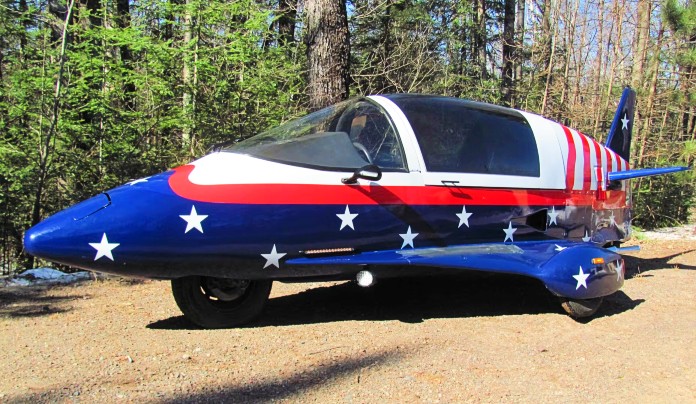
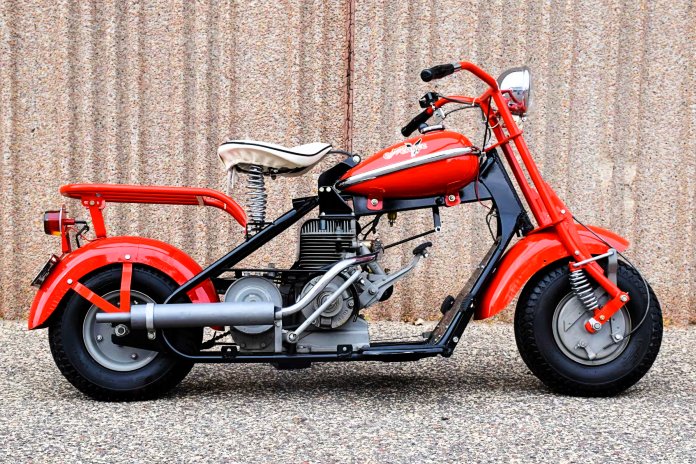
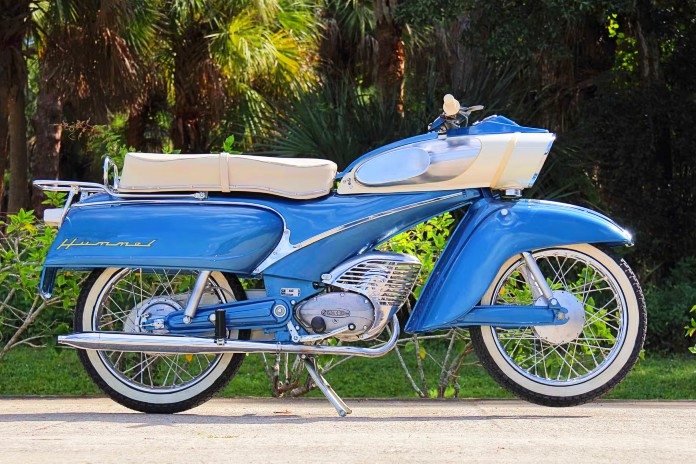
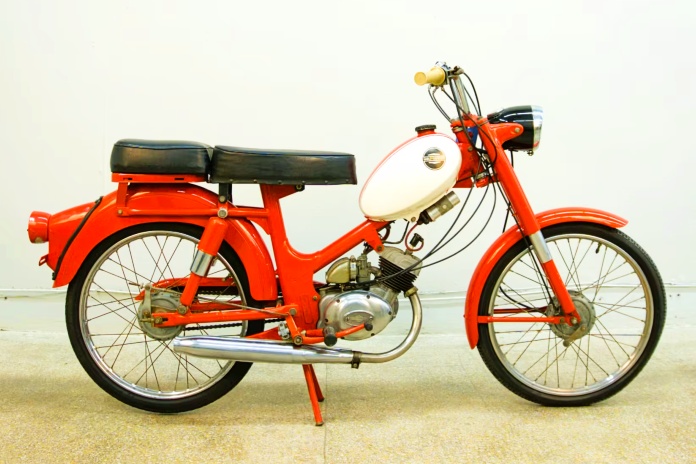
 1989 Pulse Autocycle (Lot K46) The clock is ticking down to Dana Mecum’s 39 Annual Spring Classic, known as the Indy auction, which takes place May 8-16 at the Indiana State Fairgrounds in Indianapolis. As of today (April 21), there are 105 motorcycles listed on the Mecum website that are up for sale at the Indy auction. More are being added each week. In our previous posts, we highlighted classic Harley-Davidsons, Japanese classics, and British beauties. Today we’re taking a closer look at unusual and unexpected motorcycles. 1954 Cushman Eagle 1954 Cushman Eagle (Lot G2) (Lot G2): Before minibikes were the hot thing in the 1960s and ’70s, there were Cushman Eagles. The Cushman scooter company started in 1903 (the same year Harley-Davidson was founded) in Lincoln, Nebraska, by brothers Everett and Clinton Cushman. The company started manufacturing the 4-stroke Husky engine in 1922, and it started making Auto-Glide scooters in 1936. The Cushman Eagle, which resembles a small motorcycle with its exposed engine and top-mounted fuel tank, was made from 1949 to 1965. This example underwent an amateur restoration and was purchased from the Sietsma Collection in 2005. 1961 DKW Hummel 115 1961 DKW Hummel 115 (Lot N16) (Lot N16): DKW was a German car and motorcycle manufacturer that operated from 1916 until 1966. Known as the Hummel (German for “bumblebee”), this 1961 DKW 115 is a masterpiece of Art Deco design. Powered by an air-cooled 49cc 2-stroke single-cylinder engine with a 3-speed manual transmission, the 115 has swooping, Jetsons-esque body panels that exemplify the futurism of the post-WWII era. Mocked by the European press as the “tin banana,” this blue and white example – which is being sold with no reserve – brings a smile to our face. 1965 Harley-Davidson MR50 1965 Harley-Davidson MR50 (Lot G254) (Lot G254): After the “You Meet the Nicest People on a Honda” campaign during the early 1960s led to soaring sales of the easy-to-ride Super Cub, Harley-Davidson decided to get in on the act. In 1960, Harley bought a 50% stake in Italian manufacturer Aermacchi, which built 49cc scooters that were branded as Harley-Davidsons in 1965 and 1966. This example has 2,496 miles on the odometer. It was purchased from a private collector and then put on display at Rocky’s Great Outdoors of Burton, Michigan. It is now being sold as part of the… [TheTopNews] Read More.1 week ago
 - Continental SportAttack 5 Motorcycle Tires Review
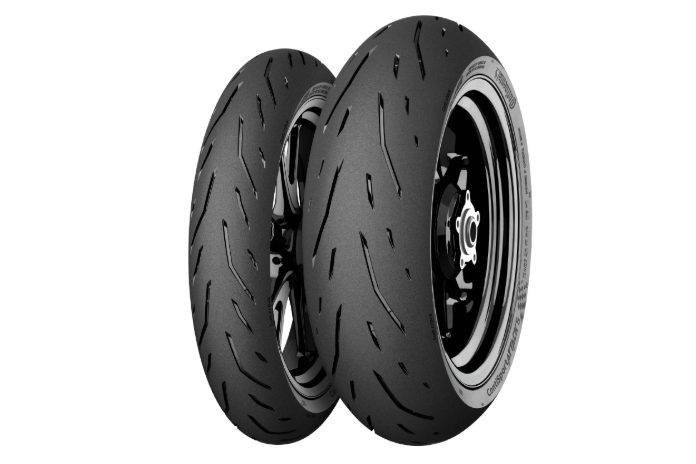
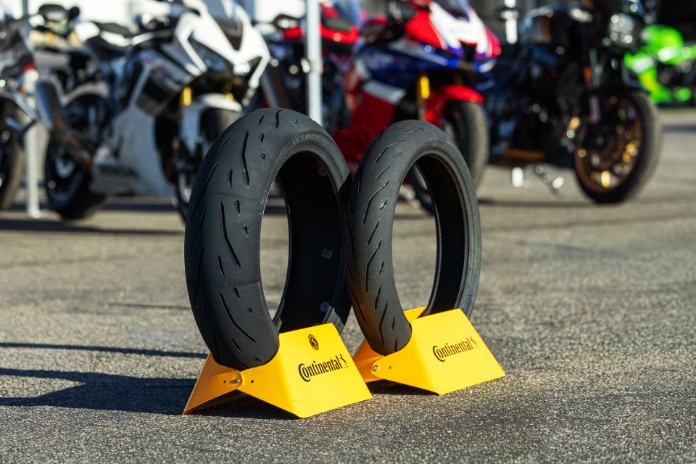
 Confidence means everything on the track, and it’s critically important on the street too. (Photos by Kevin Wing) Recently I spent the day at Chuckwalla Valley Raceway in Desert Center, California, to test the new Continental SportAttack 5 tires. My mission? To see if Continental’s newest supersport tire could serve as a true trackday offering while still performing all the safety and longevity duties of a street tire after the weekend is over and the fantasy of being a professional racer fades into the background. Now, if you are at the dentist and need a snappy summary while the Lidocaine kicks in, I’ll tell it like this: Think of the new ContiSportAttack 5 as a high-performance track tire that also happens to be street legal. That means you can spoon a set on your bike, ride to the track, pound laps all day, and then ride home. There you go. Take care and good luck with that root canal. The fifth-gen ContiSportAttack takes an already proven supersport tire and elevates it to the next level. For the rest of you in the room, Continental markets these tires as 80% street use and only 20% track, but no matter how little track riding you plan to do, the thresholds on a racetrack are so much higher that the tires must be capable of hammering lap after glorious lap if they advertise that they can perform in that environment at all. Simply put, they must get to operating temperatures rapidly without tire warmers, manage stupid lean angles at very high speeds, and handle high sustained heat without getting greasy or losing composure. For a dedicated track tire, sure, but a street tire? That’s a bit trickier. When you find yourself away from the track while living your regular 9-5, these same tires must perform almost immediately after pulling out of the garage and remain sticky and capable no matter how much speeding up or slowing down they encounter on your trip to Applebee’s. They also need to withstand a gazillion heat cycles without losing their pliability. And maybe most importantly, they can’t waste away after a thousand miles. Basically, ContiSportAttack 5s must perform competently in two totally divergent environments. Not easy and not common in a tire offering. After covering some technical details on the new ContiSportAttack 5 at the rider’s meeting, we… [TheTopNews] Read More.2 weeks ago
 - Top 5 Motorcycle Roads in Minnesota
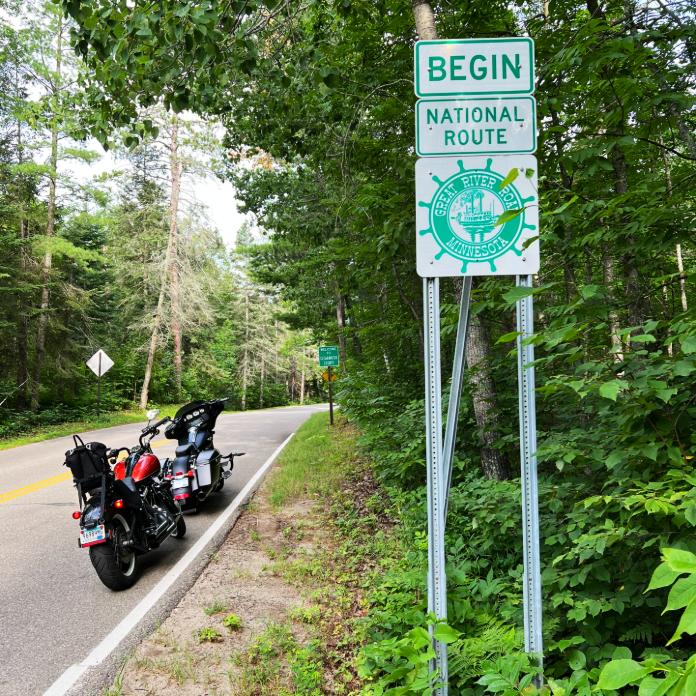
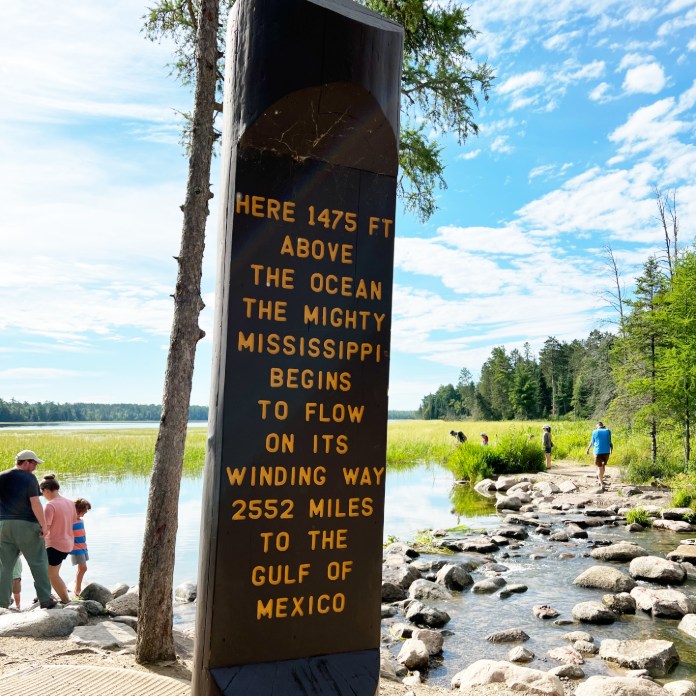
 Bird’s eye view of the Great River Road. (© Ferrer Photography / Adobe Stock) While the “Star of the North” isn’t conducive to motorcycle riding during winter, Minnesota offers a treasure trove of great roads for motorcyclists to explore in the warmer months. Also known as the “Land of 10,000 Lakes,” the state offers scenic riding alongside lakes and rivers, past impressive dolomite bluffs, and through woodlands and farm country. It’s also where the mighty Mississippi River, America’s second-longest and highest-volume river, starts as just a trickle. The culture is just as rich as the roads, with opportunities to learn about the iron industry, Native American cultures, notable Minnesotans, and more. Scan QR codes above or click links below to view routes on REVER: Route #1: Great River Road National Scenic Byway Route #2: North Shore Scenic Drive Route #3: Skyline Parkway Scenic Byway Route #4: Edge of the Wilderness National Scenic Byway Route #5: Historic Bluff Country Scenic Byway Minnesota offers opportunities for outdoor recreation as well. It’s home to 64 state parks, 9 state recreation areas, and 22 scenic byways covering nearly 3,000 miles. While each byway offers its own view of the state, we’ve narrowed the list down to the top five roads for motorcycling, considering curves, elevation changes, points of interest, and variety. If you’re planning a ride in Minnesota, this is a great place to start. See all of Rider‘s Minnesota touring stories here #1 Great River Road National Scenic Byway The scenic byway follows the Mississippi River for 3,000 miles from its source in northern Minnesota to where it pours into the Gulf of Mexico in Louisiana. (Photo by Chuck Cochran) The Great River Road, which follows the Mississippi River as it passes through and along the edges of 10 states, starts in Minnesota. It meanders for 565 miles through the heart of the state and then south along the Mississippi’s western shore where it forms the border between Minnesota and Wisconsin. At Itasca State Park, you can walk across the rocks that mark the start of the Mississippi River. From there, head toward Lake Bemidji to see the Paul Bunyan and Babe the Blue Ox statue. East of Bemidji is Grand Rapids. Following the road south brings riders to Cuyuna Country State Recreation Area and then the Mississippi National River and Recreation Area. Start… [TheTopNews] Read More.2 weeks ago
 - Motor School with Quinn Redeker: It’s Automatic
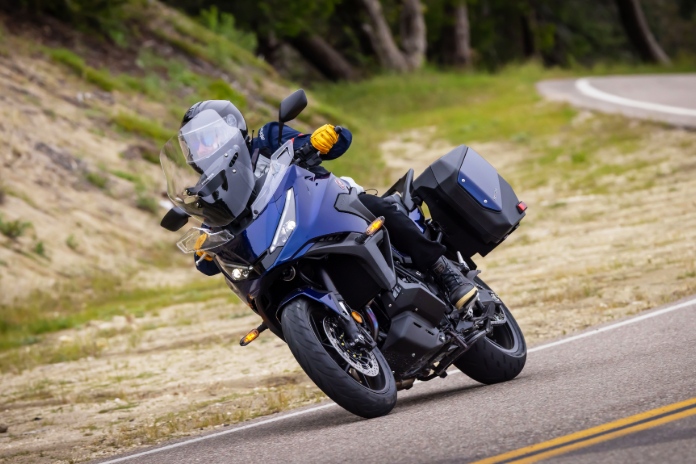
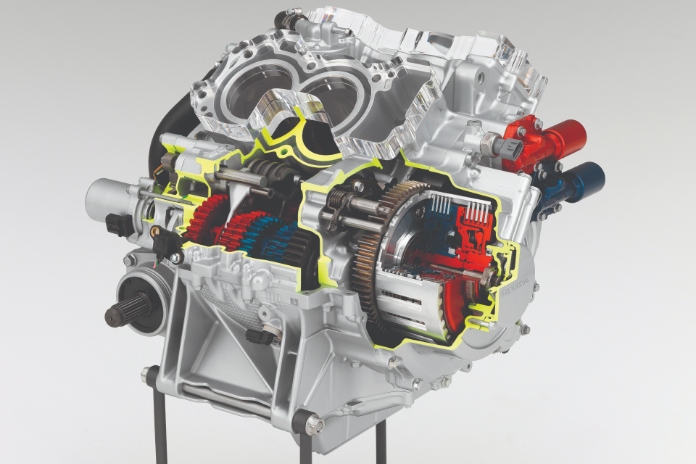
 The NT1100 DCT is one of eight models available with Honda’s automatic Dual Clutch Transmission. (Photo by Simon Cudby) If I asked you to get my BMW R 1300 RT-P out of my garage, you could do it with your eyes closed; hop on, pull in the clutch, roll the bike back and forth as you confirm it’s in 1st gear, find neutral with the delicacy of a safe cracker, and start rolling it back with careful solid presses of your legs. And if you were on a slight incline, you would probably employ the front brake preload trick as you backed out, which I won’t explain because it would come to you intuitively. But recently, I’ve been exposed to something that takes a major component of my training and motorcycling experience and blows it sideways, and we need to discuss it: automatic clutch systems. I’m confident you know about the biggies – Honda’s Dual Clutch Transmission, BMW’s Automated Shift Assistant, and KTM’s Automated Manual Transmission – and maybe you’ve been curious. Well today I’d like to give you my practical hands-on seat-of-the-pants situational optics on the subject in case you are on the fence about buying a motorcycle equipped with one of these systems. Just understand that if you want a dive deep into the technological origins and mechanical innerworkings of automatic clutch systems, I’m not your guy. And to clarify, this is not a head-to-head shootout between automatic clutches but rather an exploration of their unique characteristics when compared to a traditional manual clutch during a glorious Southern California ride day. Okay, let’s hit it. Honda’s Dual Clutch Transmission The first obvious observation is the lack of a clutch lever, and with it, the elimination of the need to use one when shifting gears. Instead, you have various buttons, selectors, and modes to get things rolling. So after a few quirky sequences are initiated, you can successfully get in gear and head down the road without the need to lift a finger (or your left toe). And hey, I’ll admit it’s kind of nice. What happens if you roll up to a traffic light and realize your airbag vest is offline and requires all hands on deck? If you are like me, you will reflexively start jabbing at zippers and tabs to get it online again, ignoring the fact that you never downshifted… [TheTopNews] Read More.2 weeks ago




The Searchable USWebDaily.com and TheTopNews NewsBank Helps You Be Better Informed, Faster! Spread The Word.