





Searchable News & Info From Reliable Online Sources.
- Thank You For Your Attention to This Birthday
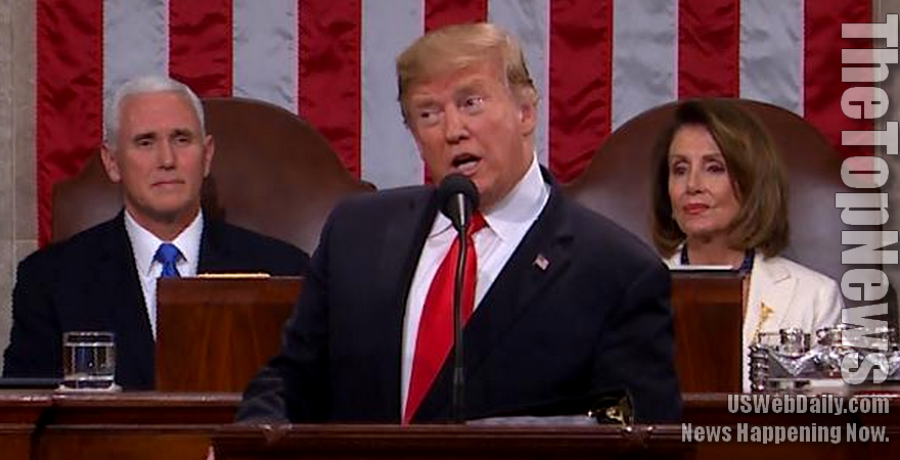
 Donald Trump is old. The president turns 80 on Sunday, becoming the second man to mark that milestone birthday in office. The other, of course, was his predecessor, Joe Biden. Neither particularly likes to be reminded of his age, and both have had White House aides furiously try to stymie any attempts to question their fitness for office. But that’s about where the similarities end when it comes to how each man prepared to ring in his ninth decade.Biden said little about his 80th as it approached, in November 2022, as if wishing to avoid contributing to the debate over whether he was too old to seek reelection. He stayed out of sight and quietly marked the occasion with an understated brunch that fell between his granddaughter’s wedding and a Thanksgiving trip to Nantucket. Trump, however, is building an illuminated octagon with a 92-foot-tall portable-canopy stage, known as the “Claw,” on the White House South Lawn, where he and thousands of spectators will watch half-naked men brutally assault each other. To each their own, I guess.Trump’s fight night is not solely for his birthday; it’s part of several weeks of events in Washington, D.C., to mark the nation’s 250th anniversary—and, hey, it’s also Flag Day. But it’s mostly about celebrating Trump, who first suggested staging a UFC fight at the White House not long after he won the 2024 election. The White House soon connected the fight with the birthdays of Trump and the nation. The more than $60 million event is so Trump; he is fond of over-the-top spectacles, he’s pals with UFC President and CEO Dana White, and he has attended multiple mixed martial arts fights across his two terms (I was in the press pool covering one in 2019 when a fighter got knocked unconscious right in front of us).[Read: Inside America’s ugly birthday battle]He’s certainly getting a spectacle. The Claw towers over the executive mansion and has clear sight lines to the Washington Monument. It’s lit up in patriotic red, white, and blue, and sometimes blasts Vegas-nightclub-style spotlights into the sky. The bleachers can seat 4,300 people for seven fights on Sunday night. A few of the fighters may even enter the octagon from the Oval Office. For some, this is Trump’s latest assault on the character and history of “the People’s House,” following the destruction of the East Wing for a proposed ballroom and the… [TheTopNews] Read More.1 week ago
 - 2026 Harley-Davidson Super Glide Preview
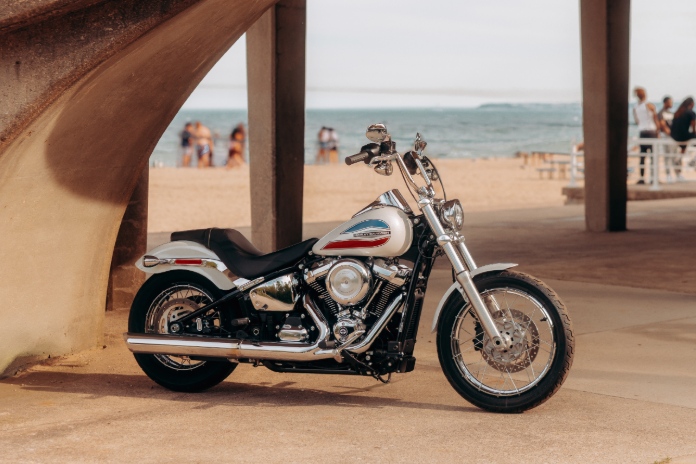
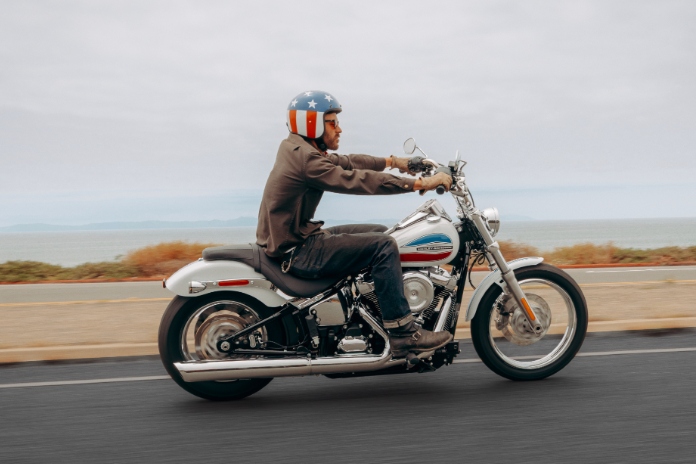
 Celebrating the 250th anniversary of the United States, the2026 Harley-Davidson Super Glide returns as a limited-edition model featuring styling based on the 1971 FX Super Glide. Only 2,500 serialized units will be available in the U.S. and Canada. The 1971 Super Glide, styled by Willie G. Davidson, combined the Big Twin FL chassis with the narrow XL Sportster fork. It was painted white with red and blue striping and a stretched bar and shield graphic on the tank. The 2026 edition honors the 1971 model with similar paint and graphics. The Super Glide is built on the Softail chassis, featuring a 49mm fork and a rear monoshock hidden below the seat that offers preload adjustment. Brakes include a single 300mm front disc and a 292 rear disc. The bike is powered by a Milwaukee-Eight 117 Classic V-Twin engine (1,923cc) that makes a claimed 98 hp and 120 lb-ft of torque. The bike also comes with three ride modes (Road, Sport, and Rain), tire pressure monitoring, and cornering ABS, traction control, and drag torque slip control. All lighting is LED. The instrumentation includes an analog speedometer and a multifunction LCD display that can be navigated via the hand control button. Also included is a USB-C charging port on the left side of the motorcycle. Styling features include bright laced wheels, a 5-gallon teardrop tank, a chrome console, and a chrome mini ape handlebar. Other bits of chrome include the powertrain trim and covers, the air cleaner cover, exhaust, side covers, rear fender struts, signals, and headlight. The serialized unit number out of 2,500 is on the fuel tank console. The 2026 Harley-Davidson Super Glide will be available for $15,999. 2026 Road Glide Liberty Edition Enthusiast Collection Harley-Davidson has also announced an expansion to the Liberty Edition Enthusiast Collection, adding the Road Glide to the collection alongside the Street Glide, Street Glide 3 Limited, and Heritage Classic. The Liberty Edition models also celebrate the 250th anniversary of the country, featuring Midnight Ember paint and eagle graphics. Visit the Harley-Davidson website for more information. Check out more new bikes in Rider‘s 2026 Motorcycle Buyers Guide The post 2026 Harley-Davidson Super Glide Preview appeared first on Rider Magazine. [TheTopNews] Read More.2 weeks ago
 - The Big 12’s potential sanctions against Texas Tech could be illegal
 "Texas Tech is confident the Big 12 will choose to act within the confines of the law..." [TheTopNews] Read More.2 weeks ago
 - Michigan and Canada Prepare for Long-Awaited Gordie Howe International Bridge Op...
 After years of planning, construction, and cross-border collaboration, the Gordie Howe International Bridge is nearing completion and is expected to become one of the most important transportation infrastructure projects in North America. Connecting Detroit, Michigan, with Windsor, Ontario, the bridge is designed to improve trade efficiency, reduce congestion at existing border crossings, and strengthen economic ties between the United States and Canada. The project has been widely viewed as a critical investment in the future of North American commerce because of the significant volume of goods that move between the two countries each day. The bridge is jointly owned by Canada and the state of Michigan and was financed primarily by the Canadian government. The Detroit-Windsor corridor serves as one of the busiest commercial trade gateways in North America. Thousands of trucks cross the border daily, transporting automotive parts, manufactured goods, agricultural products, and consumer merchandise. Industry leaders have long argued that existing crossings, particularly the Ambassador Bridge, face increasing pressure from growing trade volumes and aging infrastructure. The Gordie Howe International Bridge was conceived as a solution that would provide additional capacity while creating a more efficient and reliable route for commercial transportation. One of the bridge’s most notable features is its scale. The cable-stayed structure includes the longest main span of any bridge in North America and is designed to accommodate six traffic lanes along with dedicated pathways for pedestrians and cyclists. In addition to the bridge itself, the project includes modern ports of entry and customs facilities on both sides of the border. These facilities are expected to improve inspection processes, reduce delays, and support more efficient freight movement between the two countries. Supporters of the project believe the bridge will deliver substantial economic benefits. By reducing border bottlenecks and improving traffic flow, carriers should experience shorter transit times, lower fuel consumption, and greater supply chain reliability. Manufacturers, particularly those in the automotive sector, are expected to benefit from faster movement of parts and materials across the border. The bridge is also anticipated to create long-term economic opportunities for communities on both sides of the Detroit River through increased trade activity and regional development. While officials had anticipated opening the bridge in June 2026, authorities recently announced a delay as Canada and the United States work through several outstanding issues before allowing traffic to begin using the crossing. Despite the postponement, government leaders on both sides… [TheTopNews] Read More.2 weeks ago
 - Inside America’s Ugly Birthday BattleYears before Poison’s Bret Michaels, Young MC, and the Commodores dropped out of this summer’s concert series on the National Mall celebrating America’s 250th birthday, planners envisioned a Smithsonian-led blockbuster festival stretching from the Washington Monument to the U.S. Capitol that would be open to all and free of partisanship. They wanted a party bigger than the Folklife Festival, an annual two-week summer exhibition, and much longer-lasting. This new “Festival of Festivals” would focus on the semiquincentennial, with four to six weeks of performances, workshops, and displays to “celebrate the nation’s successes,” “contemplate the consequences of our history,” and “commit to advancing our multicultural democracy,” according to a November 27, 2023, memo that I obtained.But last summer, with little fanfare, President Trump took control of the event and renamed it. While campaigning, he had promised to work with all 50 state governors to put on his own “Great American State Fair” at the Iowa State Fairgrounds. Last July, he traveled to Iowa to announce a change of plans: “a giant patriotic festival next summer on the National Mall featuring exhibits from all 50 states.” The announcement got little attention, because at the same event, Trump said this about congressional Democrats: “I hate them.” The Smithsonian quietly recast the Festival of Festivals as a series of events around the country.So began Trump’s multipronged takeover of the historic celebrations, which will culminate on July 4—the 250th anniversary of the signing of the Declaration of Independence—amid growing disarray and conflict, according to documents I obtained and interviews with 10 people involved in the planning or oversight of the event, most of whom requested anonymity because they are not authorized to speak publicly.They described frayed trust and growing conflict that has become so acrimonious that the Department of Interior is refusing to honor a December agreement with America250, a bipartisan group authorized by Congress in 2016 to plan the nation’s festivities. A memorandum of agreement I obtained shows that the department pledged to transfer $50 million in congressional appropriations by February 1, but only $25 million has been delivered so far. “Spending taxpayer money on frivolous, poorly attended events and D.C. consultants who are trying to get rich off America’s 250th is the exact opposite of what was intended,” the Department of Interior press office told me yesterday in an unsigned statement, when I asked why the America250 money had not been transferred. “This… [TheTopNews] Read More.2 weeks ago
- Trump Isn’t Giving Up on His Slush FundWhen Acting Attorney General Todd Blanche appeared before Congress last Tuesday, senior administration officials hoped that his testimony would be enough to quell the uproar over a $1.776 billion payout scheme for Trump loyalists, including January 6 rioters. “We’re not moving forward with the fund,” he told a House appropriations subcommittee.But Blanche, who was not under oath, refused requests from a representative to put that in writing. He asked instead for Congress to take him at his word that President Trump’s politically inconvenient project for rewarding those who were allegedly victimized by the Biden-era Justice Department had truly been abandoned.It turns out that it’s not that simple. Behind the scenes, Justice Department and other Trump-administration officials have quietly assured allies that plans for some form of payout remain on track. I spoke with eight people familiar with the so-called Anti-Weaponization Fund—including current and former Justice Department officials, current and former members of Congress, a defense attorney, and political operatives close to the administration. All said that Justice Department officials and people close to the White House have indicated that the payout idea has not actually been scrapped. Rather, they say, officials are exploring whether elements of the fund can be reactivated while also examining alternative arrangements to make sure loyalists get compensated. Across the administration, and even within the Justice Department, officials have differing perspectives on whether the fund itself will ultimately be restored. But either way, officials see a path forward for the government to pay those who say they are victims of supposed government “weaponization.”A White House official told me in response to a list of emailed questions that “any speculation about potential future actions is just that—speculation. President Trump remains committed to addressing Biden-era weaponization.” A senior DOJ official who was familiar with the department’s plans said there have been no discussions at the highest levels about reviving the fund since Blanche testified, though the official acknowledged DOJ was a large institution and there may have been conversations at lower levels.Those familiar with the internal conversations—all of whom spoke with me on the condition of anonymity because they feared possible retaliation—told me that the work is being kept quiet while the Trump administration waits for opposition to the fund to blow over. Crucially, the administration is also trying to avoid a fight over the payout plan, which has been deemed a political slush fund by critics, while… [TheTopNews] Read More.2 weeks ago


The Searchable USWebDaily.com and TheTopNews NewsBank Helps You Be Better Informed, Faster! Spread The Word.