





Searchable News & Info From Reliable Online Sources.
- A.I. Agents as ‘Co-Scientists’? This Lab Says They Could Speed Drug Research...
 A.I. is already a powerful tool for scientific discovery. Now, some biomedical researchers are teaching it to do even more. [TheTopNews] Read More.3 days ago
 - Amazon gives employees grocery discount
 It can also be used for household essentials like diapers and cleaning products [TheTopNews] Read More.3 days ago
 - The Next Gene-Editing Technology May Also Be the OldestScientists have discovered a powerful gene-targeting system in viruses. Billions of years old, VIPR seems to predate CRISPR and may be even more powerful. [TheTopNews] Read More.3 days ago
- Princess Diana’s Brother Claims King Charles Sounded ‘Elated’ ...
 Buckingham Palace issued an extraordinarily rare response to one of Charles Spencer’s earlier claims. [TheTopNews] Read More.3 days ago
 - Stephen Curry says his Li-Ning signature shoe will debut early next year
 Golden State Warrior superstar Stephen Curry announced in June he was signing a long-term partnership with Chinese brand Li-Ning. [TheTopNews] Read More.3 days ago
 - ‘The Best Thing That Happened to Him Was Losing in 2020’
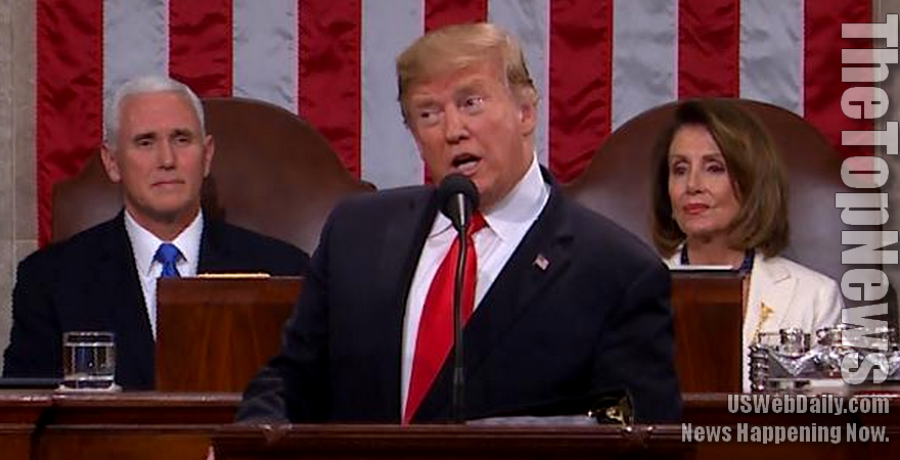
 Few reporters understand as much about Donald Trump’s thinking, motives, and behavior as Maggie Haberman and Jonathan Swan. Haberman has been covering the president closely for more than a decade at The New York Times; she started with his first campaign in 2015, and her record of scoops quickly brought her into the public eye. Swan was, for many years, her chief professional rival: He worked for Axios, where he landed a controversial 2018 one-on-one interview with Trump. In late 2022, the Times announced that it was hiring Swan, turning the rivals into colleagues.This past June, they published Regime Change: Inside the Imperial Presidency of Donald Trump. The book, an instant best seller, advances a new understanding of the first year of Trump’s second term, relaying in minute-by-minute detail how, since retaking office, he has pursued his personal goals with few limits on his power. The Atlantic staff writer Tim Alberta sat down with both authors at The Atlantic Festival, where he asked them about the 2028 election and the future of the presidency and the Republican Party. This interview has been edited and condensed for clarity.Tim Alberta: Maggie, this country has been through a lot, and I’m wondering if you could help us understand how a “regime change” of this sort came to be.Maggie Haberman: Essentially, we have had a series of national traumas since 9/11: two forever wars, a fiscal crisis, immense populist anger that started rising in 2010. To me, that was the year that set the tone. It was also the year that the proto-Trump, Carl Paladino, was the Republican nominee for governor in New York State. One of the issues that he ran on was the planned mosque to be built near the World Trade Center; it became known incorrectly as the “Ground Zero Mosque,” and it became a clear avatar of a change in this country after the era of George W. Bush. So you get to 2014, when immigration and particularly border crossings were on the rise under President Obama. Suddenly, this became a massive issue within the Republican Party. You had this mix of anger over the wars, anger over the massive accumulated debt under President Bush, then Obamacare, anger about immigration, and a shifting job market. The time was ripe for a candidate who presented himself as a fighter—and who was already known to most of the Republican electorate, not… [TheTopNews] Read More.3 days ago

The Searchable USWebDaily.com and TheTopNews NewsBank Helps You Be Better Informed, Faster! Spread The Word.