




Searchable News & Info From Reliable Online Sources.
- New York, 25 Years Later
 Photographs by Sasha ArutyunovaLike most New Englanders of a certain generation, my parents viewed New York City with distrust. They associated their neighbor to the south with “The Bronx Is Burning,” Bernhard Goetz, blackouts, bankruptcy, and the famous New York Daily News headline Ford to City: Drop Dead. The heart of Manhattan was a decadent playground for the wealthy, while outlying neighborhoods were plagued by desperate poverty and violence. I grew up only 200 miles away, and yet my parents never took me there as a kid.But if New York felt menacing and foreign to them, in reality, it is the most American of cities. New York is a symbol of the nation’s money and power, its diversity and freedom. It is our capital of culture, a proudly loud and bustling melting pot. And for those who wanted to humble the world’s sole superpower, New York was the perfect place to strike 25 years ago this week. Two of its signature skyscrapers were toppled, and nearly 3,000 lives were lost.The response underscored how much New York belongs to America. Rescue workers from red and blue states raced to help. Donations poured in from rich California cities and small Montana towns. American flags were seemingly everywhere. For the first time in decades, and less than a year after a bitterly contested presidential election, the nation felt unified.We’ve been chasing that feeling ever since. New York City has bounced back—revitalized and thriving—with a new skyline emerging from the dust. But the nation is deeply divided, with angrier elections and escalating political violence. The pandemic could have brought the sort of unity we felt after the terror attacks, but it instead largely fostered division and rage. There is a new conflict in the Middle East, one whose dubious origins evoke the misguided war launched there after the World Trade Center fell. And now, a quarter century after the September 11 attacks, a New Yorker is president, one who was in Manhattan that crystal-clear, late-summer day. But Donald Trump won’t be there on Friday. My first visit to New York City included the World Trade Center. I was in high school when, in 1995, my brother and I joined a church-group trip down from Massachusetts (my parents still wanted no part of it) to Liberty and Ellis Islands. I remember the ferry ride back to Lower Manhattan at the day’s end, staring at those impossibly… [TheTopNews] Read More.2 weeks ago
 - All the Places Trump Was on 9/11
 Updated at 4:30 p.m. ET on September 9, 2026Where were you on 9/11? Every American old enough to remember the day has an answer to that question. President Trump has several.At a ceremony honoring first responders and victims’ families yesterday, Trump offered an elaborate account of where he was in the hours and days after nearly 3,000 Americans were killed. “I was building a big building in New York, and I took the whole crew down there right after this happened, and they had no hesitation; everybody went down with me. We went down as a big group of people. Wasn’t too much we could do, I’ll be honest. It was raw—nobody had seen anything like it, ever.”The story presents significant problems in terms of its relationship to reality. Listeners could be forgiven for interpreting Trump’s remarks as a reference to his whereabouts on the day of the attack itself. (The president clarified that timeline last night: “I was there, obviously not on the same day as the collapse, but shortly thereafter, with a large group of Construction Workers,” he wrote in a Truth Social post.) It is true that two days after the attack, on September 13, Trump was interviewed by reporters while walking in Lower Manhattan. The president has previously made variations of the same claim—that he and the employees he sent downtown helped clear rubble in the days following the attack. “Everyone who helped clear the rubble—and I was there, and I watched, and I helped a little bit” was his version of it on the 2016 campaign trail. But supporting evidence is scant, and the whole account is likely an exaggeration. Richard Alles, a retired New York City Fire Department deputy chief who had a supervisory role in the efforts, said in 2019 not only that he never witnessed Trump at the site, but that the account doesn’t add up: “He was a private citizen at the time. I don’t know what kind of role he could have possibly played.” And, Alles added, if Trump had indeed sent workers, as he has claimed, there would be a record of it: “Is there a chance he was ever down there by himself and I didn’t know it? It’s possible, but I know of no one who ever witnessed him there.”Nevertheless, Trump pressed on, veering into territory even further detached from verifiable fact. The U.S. Steel Building—a skyscraper… [TheTopNews] Read More.2 weeks ago
 - Federal Safety Leaders to Address Drowsy Driving at National Forum
 Federal transportation safety leaders will gather in Washington, D.C., this fall for a national discussion focused on reducing drowsy driving and preventing fatigue-related crashes. The National Sleep Foundation will host its 2026 Drowsy Driving Forum on October 29 at the National Press Club, bringing together government officials, researchers, health experts, and transportation industry representatives. The event’s Leadership Panel will include Jonathan Morrison, administrator of the National Highway Traffic Safety Administration, and Thomas Chapman, board member of the National Transportation Safety Board. John Bozzella, president and CEO of the Alliance for Automotive Innovation, will also participate. Moderating the discussion will be Mark Rosekind, chairman of the National Sleep Foundation’s board of directors. Rosekind previously served as NHTSA administrator and as an NTSB board member, giving him experience with federal transportation policy and roadway safety. The leadership discussion will focus on national regulatory priorities and potential strategies for reducing crashes associated with driver sleepiness. Organizers intend to bring together perspectives from different sectors to identify practical actions that could improve roadway safety. Rosekind emphasized that addressing drowsy driving requires cooperation across multiple disciplines and industries. By bringing government, safety, research, and transportation leaders together, the National Sleep Foundation hopes the forum can help move the discussion from general awareness toward practical solutions. A second expert panel will focus on the National Sleep Foundation’s latest research. During the session, the organization plans to release its 2026 Drowsy Driving Survey, which will provide updated information about driver attitudes, behaviors, and experiences involving driving while sleep-deprived. The research could provide policymakers and transportation organizations with additional insight into how motorists perceive fatigue risks and how frequently drivers continue operating vehicles without adequate sleep. That information may also help shape future education, safety programs, and regulatory discussions. National Sleep Foundation CEO John Lopos said the event is intended to generate meaningful dialogue and action by bringing together experts from government, health care, research, and industry. The issue carries particular importance for the trucking industry. Commercial drivers often operate for extended periods while managing demanding schedules, changing traffic conditions, overnight driving, and irregular sleep opportunities. At the same time, trucking companies and drivers must comply with hours-of-service regulations intended to reduce fatigue and provide adequate rest periods. Because commercial motor vehicle operations are directly affected by fatigue-related safety policies, the forum will provide trucking stakeholders with an opportunity to hear federal regulators discuss their priorities and… [TheTopNews] Read More.2 weeks ago
 - Where the time went
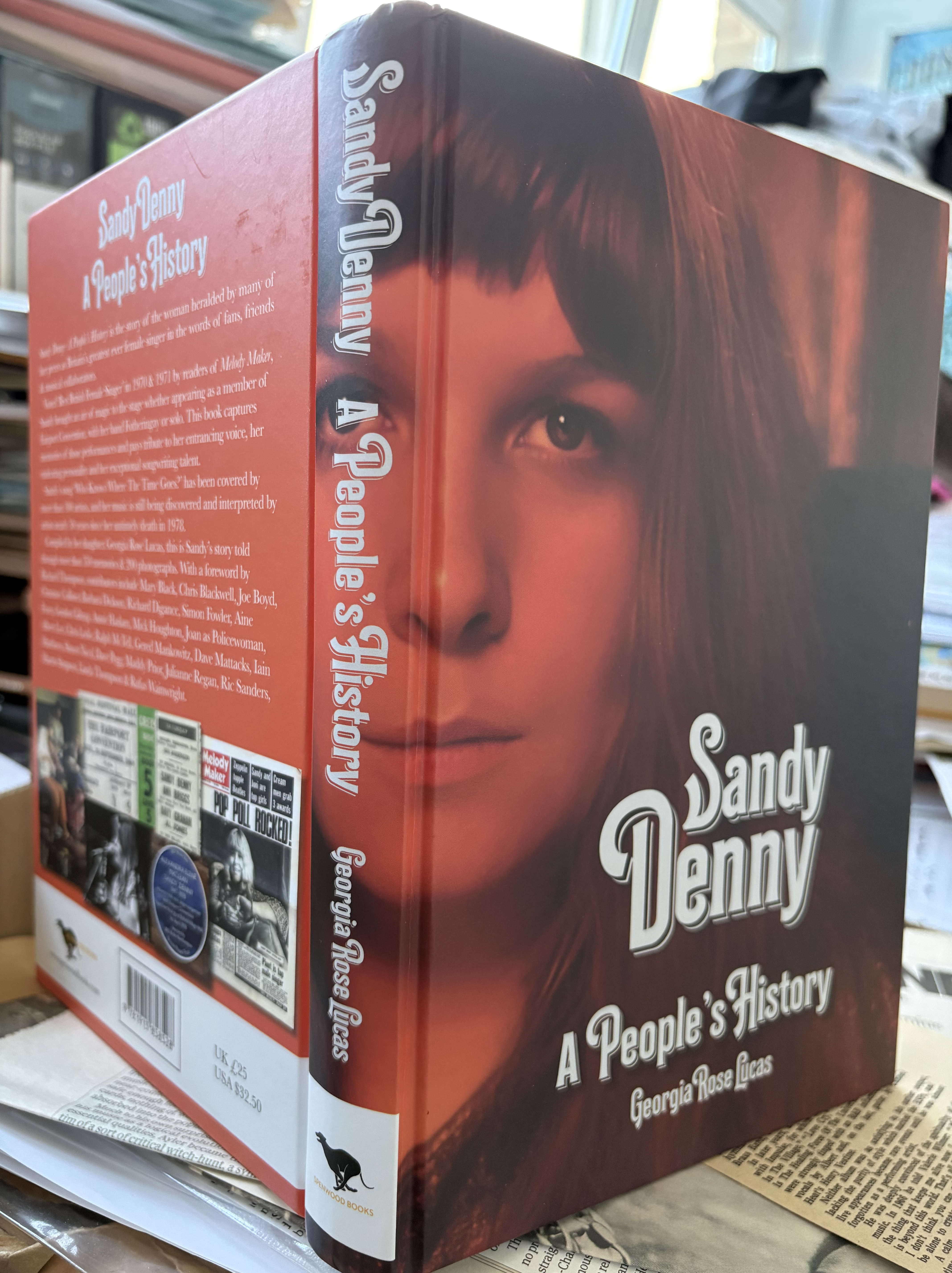
 Sandy Denny was shy, impulsive, proverbially clumsy, liked a drink a bit too well, and was loved despite her frailties and peccadilloes by all who came under the spell of her voice and her songs. She died in 1978, aged 31, after a fall at home, the promise of a songwriter capable of coming up with “Who Knows Where the Time Goes” at the age of 18 sadly unfulfilled and her solo career destined to remain the subject of regretful conjecture. For all that, she remains a great figure of British music, as successive generations continue to discover. Although Mick Houghton’s I’ve Always Kept a Unicorn, published in 2015, is likely to remain the standard biography, a new book titled Sandy Denny: A People’s History is a most valuable addition to the record. Compiled and edited by her daughter, Georgia Rose Lucas, who was nine months old when Sandy died, it consists of oral and sometimes written testimony from dozens and dozens of those who encountered the singer at every level of engagement, from fellow members of the Strawbs, Fairport Convention and Fotheringay, studio engineers and producers to old boyfriends, college mates, students’ union social secretaries and fans who worshipped from a distance. Of the latter class, there’s the tale told by a man called Steffan Wennerlund, who saw in a British music paper a notice saying that Fairport would be playing a garden fete at Cropredy to raise funds for the village hall roof in the summer of 1977 and jumped on a flight from Sweden. As he made his way down a path, he saw Sandy getting out of a car with her husband, Trevor Lucas. She was wearing a long white dress. He wanted to say something as she passed, but found himself tongue-tied. She didn’t perform, which disappointed him. But there was a lasting compensation: “A beautiful picture I have in my memory of Sandy coming towards me on the path, in the evening light, in her white dress.” There is a witness to her final public performance, at Byfield village hall a couple of weeks before she died. One of an audience of about 30 people, Lou Hart heard a solo set that closed with “Who Knows Where the Times Goes”. Dave Cousins remembers the lines he wrote in a song about her: “Every time I hear your name, my eyes… [TheTopNews] Read More.2 weeks ago
 - Dominion still has pending lawsuits against election deniers such as Rudy Giulia...
 [TheTopNews] Read More.2 weeks ago
 - NYC officials release unseen post-9/11 air quality documents
 New York City officials released thousands of previously unseen documents questioning the air quality at Ground Zero following the 9/11 attacks. [TheTopNews] Read More.2 weeks ago

The Searchable USWebDaily.com and TheTopNews NewsBank Helps You Be Better Informed, Faster! Spread The Word.